
Welcome / Bienvenidx
Synchronous: June 17th and 18th
Sincrónico: 17 y 18 de Junio
Keynote: Mexico City 2006-Mexico City 2021 & Beyond!
Conferencia Magistral: Ciudad de
México 2006, 2021 y ¡más allá!
Sabina Berman, Mark Bly, Liz Engelman, Conchi León, Silvia Peláez, Brian Quirt
In 2006, ten LMDA Member Delegates from Canada and the United States were invited to the prestigious
international Gateway to the Americas Festival in Mexico City. In LMDA’s first ever event in Mexico
they participated and led a series of roundtables on the challenges facing playwrights in Mexico and Latin
America in the areas of translation, circulation, publication, and production opportunities, and also
questions about what a dramaturg does all leading to a lively mutual exchange. Now fifteen years later, we
have gathered together a panel that helped to make this original exchange take place including Sabina
Berman, Conchi Leon, and Silvia Pelaez from Mexico; Brian Quirt from Canada; and Mark Bly and Liz Engelman
from the United States. This panel, moderated by Mark Bly LMDA’s Board President back in 2006, will
touch on the original Festival, with panelists sharing how that Festival and the mutual exchange generated
new opportunities for them, where they are now as artists and educators, their dreams for the future, and
finally, how in deploying the digital we can to continue to break down the visible and invisible artistic
borders in the face of increasing globalization and 21st Century “colonization” that takes place
in our lives now.
En 2006, diez miembros delegados de la LMDA de Canadá y Estados Unidos fueron invitadxs al prestigioso
Festival Internacional Gateway to the Americas en la Ciudad de México. En el primer evento de la LMDA
en México, participaron y lideraron una serie de mesas redondas sobre los desafíos que
enfrentan los dramaturgistas en México y América Latina en las áreas de
traducción, circulación, publicación y oportunidades de producción, y preguntas
sobre lo que hace un dramaturgista, lo que llevó a un vivo intercambio de ideas. Ahora, quince
años después, hemos reunido en un panel a quienes ayudaron a que este intercambio se llevara a
cabo originalmente, incluyendo a Sabina Berman, Conchi León y Silvia Peláez de México;
Brian Quirt de Canadá; y Mark Bly y Liz Engelman de Estados Unidos. Este panel, moderado por Mark
Bly, presidente de la junta directiva de LMDA en 2006, hablará sobre el Festival original y lxs
panelistas invitadxs compartirán las oportunidades que se generaron, dónde se encuentran ahora
como artistas y educadores, sus sueños para el futuro, y finalmente, cómo al desplegar lo
digital podemos seguir rompiendo las fronteras artísticas visibles e invisibles frente a la creciente
globalización y la “colonización” del siglo XXI que tiene lugar en nuestras vidas
ahora.
Canadian and Mexican Artist Exchange
Intercambio artístico Canadá –
México
Daniela Atiencia, Pedro Chamale, Didanwy Kent, Paula Zelaya, Emilio Méndez, Carmen Aguirre
LMDA Canada has partnered with the Canadian Latinx Theatre Artist Coalition (CALTAC) and LMDA Mexico to host
an online panel to discuss the intersection of Latinx dramaturgical processes in Mexico, Canada, and
beyond.
The panel led by Canadian Latinx Vancouver-based theatre artists, Pedro Chamale and Daniela Atiencia, will be
composed of three Canadian artists and three Mexican artists. The goal of the panel will be to discuss the
vibrant and varied work created by Latinx artists in both countries and the intersections of their work.
With this panel, we foresee passionate conversations around dramaturgy in Latinx artistic communities, as
well as the difference and similarities of dramaturgical work around the world. We will also open the
discussion to conference participants in order to encourage the exchange of ideas and stimulate thoughtful
conversation.
LMDA Canada se ha asociado con Canadian Latinx Theatre Artist Coalition (CALTAC) y LMDA México para
organizar un panel en línea para discutir la intersección de los procesos de dramaturgismo
latinX en México, Canadá y más allá.
El panel dirigido por los artistas de teatro latinx canadienses con sede en Vancouver, Pedro Chamale y
Daniela Atiencia, estará compuesto por tres artistas canadienses y tres artistas mexicanos. El
objetivo del panel será discutir el trabajo vibrante y diverso creado por artistas latinX en ambos
países y las intersecciones de sus trabajo.
Con este panel, anticipamos conversaciones apasionadas en torno al dramaturgismo en las comunidades
artísticas latinX, así como las diferencias y similitudes del trabajo de dramaturgismo
alrededor del mundo. También abriremos el debate a los participantes del congreso para fomentar el
intercambio de ideas y estimular una conversación reflectiva.
Dramaturging The Phoenix
El Dramaturgismo del Fénix
Ken Cerniglia, Anne G. Morgan
Members of the curating team will share highlights from Dramaturging the Phoenix, an LMDA initiative started
in April 2020 as the pandemic began to change our world. Through dozens of essays and weekly Zoom forums,
all archived on the LMDA website, Dramaturging the Phoenix asks us to imagine what’s possible when
in-person theatre rises from its dormancy (and ashes) when it’s safe to return.
Lxs miembros del equipo de curadores compartirán los aspectos más destacados de Dramaturging
the Phoenix (El Dramaturgismo del Fénix), una iniciativa de LMDA que comenzó en abril de 2020,
cuando la pandemia comenzaba a cambiar nuestro mundo. A través de docenas de ensayos y foros de Zoom
semanales, todos archivados en el sitio web de LMDA, El Dramaturgismo del Fénix nos pide que
imaginemos lo que será posible cuando el teatro presencial reactive actividades (y resurja de las
cenizas).
Hamlet in Mafia City: Performing in a mobile strategy video game
Hamlet en Ciudad Mafia:
Interpretando en un video juego de estrategia móvil
María Fernanda González-Ríos
This case study intends to showcase the use of Mafia City (Video-game Platform) as a medium to create live
performances in the middle of a pandemic and how it allowed to break with political borders and encourage
international collaborations easily.
Hamlet, Prince of los Santos was a live performance of Hamlet by Shakespeare that we created with different
artists from all over the world. The idea of this talk is to use this experience to discuss some important
changes in our creation processes compared to the in-person process. It raises questions related to borders
and political-world limitations. Also, it brings innovative questions about interdisciplinary collaborations
that can cultivate new audiences and reach out to people who would normally not attend theatre performances.
Finally, it challenges the possibilities of inclusion in an online anonymous platform, as well as, the
problematic male white-centric perspective in video-game platforms that can limit representation.
Este caso de estudio pretende mostrar el uso de Mafia City (plataforma de videojuegos) como medio para crear
actuaciones en vivo en medio de una pandemia y cómo permitió romper fronteras políticas
y fomentar colaboraciones internacionales con facilidad.
Hamlet, Prince of los Santos fue una actuación en vivo de Hamlet de Shakespeare que creamos con
diferentes artistas de todo el mundo. La idea de esta charla es utilizar esta experiencia para discutir
algunos cambios importantes en nuestros procesos de creación en comparación con el proceso en
persona. Plantea cuestiones relacionadas con las fronteras y las limitaciones del mundo político.
Además, trae preguntas innovadoras sobre colaboraciones interdisciplinarias que pueden cultivar
nuevas audiencias y llegar a personas que normalmente no asistirían a representaciones teatrales.
Finalmente, desafía las posibilidades de inclusión en una plataforma anónima en
línea, así como la problemática perspectiva masculina centrada en el blanco en las
plataformas de videojuegos que pueden limitar la representación.
Hot Topics
Hot Topics
Jane Barnette
- Karen Jean Martinson
- Stop and Breathe: Reflections on a Year of Pandemic Teaching / Detenerse y respirar: reflexiones sobre
enseñar en un año pandémicol
- Stop and Breathe: Reflections on a Year of Pandemic Teaching / Detenerse y respirar: reflexiones sobre
- Jack Truman
- Can Film Dramaturgy Be Created in Today’s Entertainment Industry? / ¿Puede el dramaturgismo en
cine incursionar en la industria actual del entretenimiento?
- Can Film Dramaturgy Be Created in Today’s Entertainment Industry? / ¿Puede el dramaturgismo en
- Brenda Muñoz Salazar
- The Eye of the Dramaturg / La mirada del dramaturgista
- Michael Chemers, Martha Herrera-Lasso & Analola Santana
- Ghost Light: Translation to Spanish / Ghost Light: Traducción al español
- Sara Freeman
- Archives and Border Crossings: The National Theatre Translation Fund Project of the 1990s / Archivos y
cruces fronterizos: el proyecto del Fondo Nacional de Traducción de Teatro en la década de
1990
- Archives and Border Crossings: The National Theatre Translation Fund Project of the 1990s / Archivos y
- LaRonika Thomas
- Firing the Canon–Part II / Disparándole al canon– Parte II
- Fabian Jossué López Ramírez
- Drag Art: ‘The Force is the Joteria’ / Arte drag: la fuerza está en la joteria
- Cassandra Ludlum
- Recognizing the Gaps / Reconociendo las brechas
- Nicola Olsen
- Digital Rehearsals Lost and Found / Ensayos virtuales, perdidos y encontrados
HOT TOPICS speakers present a provocative question, assertion, issue, or project with which they are
currently (passionately) engaged to initiate conversations and collaborations, or to address pressing issues
for our community. Speakers have just five minutes each to open a door into their topic.
The strict time limit allows for multiple presentations and follow-up conversations. It also requires
careful preparation. At four minutes, the host will give the presenter a one-minute warning; at five
minutes, the presenter will be gently, but firmly, yanked off of the stage.
This year’s Hot Topics features presentations in both English and Spanish! Speakers will share
scintillating insights about the pandemic, the canon, archives, film dramaturgy, religious challenges, and
dramaturgical drag, among other topics. Come for the provocation; stay for the conversation; be inspired by
the critical generosity!
Lxs ponentes de HOT TOPICS presentan una pregunta provocativa, una hipótesis, un dilema o un proyecto
con el que actualmente estén profundamente involucradxs con el fin de detonar conversaciones o
colaboraciones y/o visibilizar asuntos urgentes para nuestra comunidad. Cada presentador/a tiene sólo
5 minutos para abrir la puerta a su tema. El estricto límite de tiempo permite que haya
múltiples presentaciones y conversaciones que las acompañen. Lxs presentadorxs deberán
preparar cuidadosamente discursos de 5 minutos para plantear sus temas y dar la bienvenida a otrxs a unirse
a la discusión al final de todas las presentaciones.
Por primera vez en la historia de Hot Topics, este año lxs panelistas podrán hacer sus
presentaciones en Español o en Inglés. Lxs panelistas compartirán descubrimientos
brillantes sobre la pandemia, el canon, la documentación, dramaturgismo y cine, retos religiosos,
drag dramatúrgico, entre otros temas. ¡Ven a la provocación, quédate a la
conversación, inspírate por la generosidad crítica!
International Dramaturgy Lab: Connecting Dramaturgs Across Borders
Laboratorio
Internacional de Dramaturgismo: conectando dramaturgistas a través de las fronteras
Hanna Slattne, Phaedra Scott, Sarah Sigal, Laurel Green, Martha Herrera-Lasso, David Robertson
The International Dramaturgy Lab (IDL) connected over 90 dramaturgs and theatre makers from 7 different
partner organisations across the globe. It hosted 14 groups put together across language, culture and
timezones to share, explore, create and innovate. The theme and the practice was to work
dramaturgically across borders. The project was successful beyond expectations. Reflecting back
on the experience and the importance of supporting and nurturing cross-border contacts between dramaturgs,
we also look to the future to see how we build on this extraordinary journey. Members of the steering group
who shaped, facilitated and made the IDL happen will share the journey, the learnings and the inspirations.
El Laboratorio Internacional de Dramaturgismo (LID) conectó a más de 90 dramaturgistas y
creadores escénicxs de 7 distintas asociaciones alrededor del mundo. Creó 14 grupos con
participantes de distintas culturas, lenguas y husos horarios para compartir, explorar, crear e innovar. El
tema y la práctica fueron el trabajar dramaturgísticamente a través de las
fronteras. El proyecto superó todas nuestras expectativas. En esta conversación
hacemos una reflexión en cuanto a la experiencia y la importancia de apoyar y nutrir contactos entre
dramturgistas a través de fronteras, y vemos hacia el futuro para imaginar cómo podemos seguir
construyendo sobre este extraordinario camino. Miembrxs del comité directivo quienes dieron forma,
facilitaron e hicieron posible el LID, compartirán esta travesía, los aprendizajes y las
inspiraciones.
LMDA´s Anti-racism task force
Grupo de trabajo de LMDA contra el racismo
Amanda Dawson, Russel M. Dembin, Karen Jean Martinson, Jenna Rodgers, Lynde Rosario, Nakissa Etemad
This panel is a share out of the work of the Anti-Racism task force from the past year, a conversation about
the future of the work of the task force, information sharing, and how members can get involved.
Este panel es parte del trabajo del Grupo de Trabajo Contra el Racismo formado el año pasado, una
conversación sobre el futuro del grupo, sus proyectos, como funciona este intercambio de
información y cómo lxs miembros de LMDA pueden participar.
New Developments in the New Play Exchange
Avances del proyecto: New Play Exchange
(intercambio de obras nuevas)
Gwydion Suilebhan
In this session, we will review the upcoming new developments in the New Play Exchange and understand how
they will serve the entire theater community, with a particular focus on literary managers and dramaturgs.
Playwrights Under the Radar
Dramaturgxs en el Radar
Bryan Moore
- Susanna Bezooyen | Ariel Mitchell
- Adrian Centeno | Amanda L. Andrei
- Ann-Marie Dittmann | Amy
Tofte - David Geary | Kim Senklip Harvey
- Jacqueline Goldfinger | Rachel Lynett, Alexandra Espinoza, Jarrett McCreary
- Lourdes Guzmán González | Javier Márquez
- Brad Rothbart | Brice Haygen-Walker, A.A. Brenner
Speakers will spread the word about one of “their” playwrights — maybe one they’ve worked with or want to
work with, or maybe one whose plays they just love — but who may not yet be on the national or
international radar. Using the popular Hot Topics format, each presenter will get five minutes to sing the
praises of a playwright they believe deserves a spot in the big leagues. Come discover a new “favorite,” and
help spread the word.
Lxs presentadorxs harán correr la voz sobre unx de “sus” dramaturgos o dramaturgas, tal vez alguien
con quien hayan trabajado o con quien quieran trabajar, o tal vez alguien cuyas obras les encanten, pero que
aún no esté en el radar nacional o internacional. Usando el popular formato de Hot Topics,
todxs lxs presentadores tendrán cinco minutos para cantar las alabanzas sobre un dramaturgo o una
dramaturga que creen que merece un lugar en las grandes ligas. Descubre a lxs nuevxs “favoritxs” y corre la
voz.
Toolkits for University Dramaturgs and the Students They Teach
Kit de herramientas para
dramaturgistas docentes y sus estudiantes
Jane Barnette, Shelley Graham, Karen Jean Martinson, Daniel Smith
Teaching dramaturgy in higher education can be a daunting pursuit, as we are often the lone specialists
trying to cultivate a culture of dramaturgy and dramaturgical thinking amid rigid production processes while
also educating and mentoring young dramaturgs who have often just learned of the discipline. Because we
believe that dramaturgy is vital to theatre-making and to envisioning the theatre that re-emerges from this
pandemic pause, we want to assist our “lone wolf” faculty and student dramaturgs across
academia. We will create and share several documents which we hope will become a dynamic, living toolkit.
For instructors, we will curate materials which might include best practices/touchstones for developing a
dramaturgy program, mentorship resources, tips for introducing dramaturgy into other theatre courses,
pointers for lobby displays, tips from KC/ACTF dramaturgy coordinators, writing guides for program notes and
research and study guides, and an annotated “bibliography” of dramaturgy websites. For students,
we will offer such resources as learning guides, networking possibilities, tips for effective dramaturgy on
social media, materials about advocating for dramaturgy as a student, an archive of excellent dramaturgical
writing, and resources about quality mentorship. We plan to use the session to review these documents and
get feedback from our peers, with an eye toward disseminating the edited resources after the
conference.
Enseñar dramaturgismo en la educación superior puede ser una tarea desalentadora, ya que a
menudo somos lxs únicxs especialistas intentando cultivar una cultura de dramaturgismo y pensamiento
dramaturgístico en medio de procesos de producción rígidos, al mismo tiempo que
educamos y asesoramos a jóvenes dramaturgistas. Creemos que el dramaturgismo es vital para la
creación teatral y, para visualizar el teatro que resurgirá después de esta pausa
pandémica, queremos ayudar a las facultades y estudiantes de dramaturgismo en todo el mundo creando y
compartiendo varios documentos que esperamos se conviertan en un conjunto de herramientas dinámico y
vivo. Para lxs docentes, seleccionaremos materiales que podrían incluir las mejores prácticas
y bases para desarrollar un programa de dramaturgismo, recursos de tutoría, consejos para introducir
dramaturgismo en otros cursos de teatro, sugerencias para exhibiciones en el lobby, consejos de los
coordinadores de dramaturgismo de KC / ACTF, guías de escritura para notas del programa así
como guías de investigación y estudio y una “bibliografía” son sitios web
sobre dramaturgismo. Para los estudiantes, ofreceremos recursos como guías de aprendizaje,
posibilidades de establecer contactos, consejos para un proceso de dramaturgsimo efectivo en redes sociales,
materiales sobre la defensa de la dramaturgismo como estudiante, un archivo sobre escritura de
dramaturgística y recursos sobre tutoría de calidad. Planeamos utilizar la sesión para
revisar estos documentos y obtener comentarios de nuestros pares, con miras a difundir los recursos editados
después de la conferencia.
Update, adaptation or intervention: the limits of the work of the dramaturg
in Los signos del zodiaco (The Zodiac Signs) by Sergio Magaña
Actualización, adaptación o intervención: los límites del trabajo del
dramaturgista en Los signos del zodiaco de Sergio Magaña
Elvira Popova
The lecture studies the work of a playwright in the staging “The signs of the zodiac” by the playwright
Sergio Magaña with the group Teatro Mexicano Monterrey as an effort to stage a classic Mexican text
from the 50s of the 20th century in the 21st century. The world without opportunities in which the
characters live brings us closer to the current world that cracks the desire for freedom and development, a
globalized and neoliberal world, dominated by the free market and the lack of opportunities that fractures
the human spirit and predestines the past as the unique sense of belonging. How to translate the characters
in this text into a new context? How to intervene the text to synthesize its meaning and faithfully express
the original ideas of the author? Reflections on the limits of an adaptation, update or intervention are
structured around these questions and the construction of the script is analyzed.
La ponencia estudia el trabajo de dramaturgista en la puesta en escena “Los signos del zodiaco”
del dramaturgo Sergio Magaña con el grupo Teatro Mexicano Monterrey como un esfuerzo de llevar a
escena en el siglo XXI un texto clásico mexicano de los años 50 del siglo XX. El mundo sin
oportunidades en el que viven los personajes nos acerca al mundo actual que craquela todo anhelo de libertad
y desarrollo, un mundo globalizado y neoliberal, dominado por el libre mercado y la falta de oportunidades
que fractura el espíritu humano y lo predestina al pasado como único sentido de pertenencia.
¿Cómo trasladar en un nuevo contexto los personajes de este texto? ¿Cómo
intervenir el texto para sintetizar su significado y expresar con fidelidad las ideas originales del autor?
Alrededor de estas preguntas se estructuran las reflexiones sobre los límites de una
adaptación, actualización o intervención y se analiza la construcción del texto
de puesta en escena.
Update on the LMDA Wiki Project
LMDA: Proyecto Wiki: “dramaturgismo en Estados
Unidos”
Anne Cattaneo, Sara Freeman, Geoffrey Proehl
With the support of LMDA, Anne Cattaneo has led an effort with dozens of collaborators to create a
“Dramaturgy in the United States” Wiki page. It features a definition and history of dramaturgy,
information on LMDA, resources on dramaturgy (including the LMDA Bibliography), and, most importantly, an
extensive listing of professional staff dramaturgs and production credits from the seventies to the present.
A fundamental corollary of this initiative involves creating individual Wiki pages for dramaturgs, already
underway in conjunction with Wiki Education. These new pages are created via college class assignments.
Presentation will include an update on the project and ways in which LMDA members can get involved in this
effort to give the field more visibility. Launch date for page late 2021, early 2022.
Con el apoyo de LMDA, Anne Cattaneo ha liderado un esfuerzo con decenas de colaboradores para crear una
página Wiki de “Dramaturgismo en los Estados Unidos”. Presenta una definición e
historia del dramaturgismo, información sobre LMDA, recursos sobre dramaturgismo (incluida la
bibliografía de LMDA) y, lo más importante, una lista extensa de dramaturgistas profesionales
y créditos de producción desde los años setenta hasta el presente. Un corolario
fundamental de esta iniciativa implica la creación de páginas Wiki individuales para
dramaturgistas, ya en marcha en colaboración con Wiki Education. Estas nuevas páginas se crean
a través de asignaciones de clases universitarias. La presentación incluirá una
actualización sobre el proyecto y las formas en que los miembros de la LMDA pueden participar en este
esfuerzo para dar más visibilidad al campo. Fecha de lanzamiento de la página a finales de
2021, principios de 2022.
The Virtues of Virtual Dramaturgy: Access, Collaboration, Engagement
Las Virtudes del
Dramaturgismo Virtual: Acceso, Colaboración, Compromiso
Alyssa Sileo
My presentation chronicles my virtual dramaturgical processes with Snapshot and Monstress
at Drew University. I explore how dramaturgs can fulfill their roles’ responsibilities and create
conditions for successful virtual theatre. I posit how the online playspace benefits the dramaturg’s
goals of in-depth text, performance, and audience engagement. My research responsibilities for
Snapshot, new-play development role in Monstress, and engagement activities for both
productions had to flourish on digital platforms like Google Docs, Instagram, and Zoom. My assessment of
these experiences suggests the potential drawbacks of virtual theatre. As for world-building, pre-show
experiences are no longer lobby displays but rather digital projects. When the elements of the stage
transition to live on screen, dramaturgical choices must be solidified before a filmed performance goes into
post-production. When developing new work, the dramaturg must successfully track desired edits without
getting “the work up on its (physical) feet.” However, the gains of the online playspace are
notable: virtually distributed theatre emphasizes the necessity for easily accessible dramaturgical
material, and expands our horizons for cross-country and international partnerships for group playwriting
and audience engagement. The digital medium’s advantages must be recognized and perhaps retained as
theatre inevitably reshapes itself and dramaturgs continually redefine their roles and goals.
Mi presentación narra mis procesos de dramaturgismo virtual con Snapshot y Monstress en Drew
University. Exploro cómo los dramaturgistas pueden cumplir con las responsabilidades de sus roles y
crear las condiciones para el éxito del teatro virtual. Planteo cómo el espacio de juego en
línea beneficia los objetivos del dramaturgista en la propfundidad del texto y el desempeño y
participación de la audiencia. Mis responsabilidades de investigación para Snapshot, el rol de
desarrollo de nuevas obras en Monstress y las actividades de participación para ambas producciones
tuvieron que florecer en plataformas digitales como Google Docs, Instagram y Zoom. Mi evaluación de
estas experiencias sugiere los posibles inconvenientes del teatro virtual. En cuanto a la
construcción del mundo, las experiencias previas al espectáculo ya no son exhibiciones en el
lobby sino como proyectos digitales.
Cuando los elementos del escenario pasan a vivir en la pantalla, las decisiones del dramaturgistas deben
solidificarse antes de que la actuación filmada pase a la postproducción. Al desarrollar un
nuevo trabajo, el dramaturgista debe tener un claro seguimiento de las ediciones necearias para exhibir sin
“poner el trabajo en pie (físicamente)”. Sin embargo, los beneficios del espacio de juego en
línea son notables: la distribución virtual del teatro enfatiza la necesidad de material de
dramaturgismo de fácil acceso y amplía nuestros horizontes con asociaciones internacionales y
entre países para la escritura de obras de teatro en grupo y la participación de una audiencia
internacional. Las ventajas del medio digital deben ser reconocidas y quizás retenidas a medida que
el teatro inevitablemente se reconfigura y los dramaturgistas redefinen continuamente sus roles y objetivos.
White Professor, White Students: Working Through Contemporary BIPOC Plays
Profesor/a blancx, estudiantes blancxs: trabajando mediante obras
contemporáneas por creadorxs BIPOC (Black, Indigenous, People of Color)
Amanda Dawson
In fall 2020, I started a new job – Assistant Professor and Head of BA Theatre Studies at Utah State
University. And in spring 2021, I was given the opportunity to create a special topics class on theatre
history and literature. On a campus whose student population is 82% white (undergraduates), with a program
that only has a handful of BIPOC students, I wanted to teach more BIPOC plays and share more about BIPOC
playwrights. I created THEA 5720/6720: Contemporary BIPOC Playwrights. The course has 19 students (14
undergrads, 5 grads); all are white, myself included, with the exception of our Undergrad Teaching Fellow
(essentially an undergrad TA) who is Asian American. We worked out way – dramaturged our way –
through terms (race, ethnicity, BIPOC, anti-racism, etc.), topics (devised theatre, yellow/black face,
indigenous theatre, etc.), and plays (Hooded or Being Black for Dummies, Blown Youth,
The Thanksgiving Play, etc.) written by BIPOC playwrights. In this presentation, I will share some
of the challenges, the successes and failures, and the next steps that came with teaching this course.
En el otoño de 2020, comencé un nuevo trabajo: profesor asistente y director de estudios
teatrales de BA en la Universidad Estatal de Utah. Y en la primavera de 2021, tuve la oportunidad de crear
una clase con temas especiales sobre historia y literatura del teatro. En un campus cuya población
estudiantil es 82% blanca (estudiantes universitarixs), con un programa que solo tiene un puñado de
estudiantes BIPOC (Black, Indigenous, People of Color), quería enseñar más obras BIPOC
y compartir más sobre dramaturgistas BIPOC. Creé THEA 5720/6720: Contemporary BIPOC
Playwrights (Dramaturgxs contemporánexs BIPOC). El curso tiene 19 estudiantes (14 estudiantes
universitarixs, 5 graduadxs); todxs son blancxs, incluida yo misma, con la excepción de nuestro
becario de enseñanza de pregrado (esencialmente un Profesor Asistente de pregrado) que es
asiático-americano. Trabajamos – como dramaturgistas trazamos nuestro camino – a través de
términos (raza, etnia, BIPOC, antirracismo, etc.), temas (teatro ideado, cara-amarilla/negra, teatro
indígena, etc.) y obras de teatro (Hooded or Being Black for Dummies, Blown Youth,
The Thanksgiving Play, etc.) escrito por dramaturgos BIPOC. En esta presentación,
compartiré algunos de los desafíos, los éxitos y fracasos, y los próximos pasos
que vinieron con la enseñanza de este curso.
LMDA Annual General Meeting
Junta General Anual de LMDA
Bryan Moore, LMDA President
LMDA’s Annual General Meeting is our opportunity to review the organization’s work over the past year, hear
from members of the Executive and Board of Directors, and begin to look ahead to next year. We look forward
to hearing your voices even if we can’t gather, and your attendance is important to LMDA’s health as an
organization.
Asynchronous Content
Contenido Asincrónico
Writing a Book Proposal to Share your Dramaturgical Methods
Escribiendo una propuesta de
libro para compartir métodos de dramaturgismo
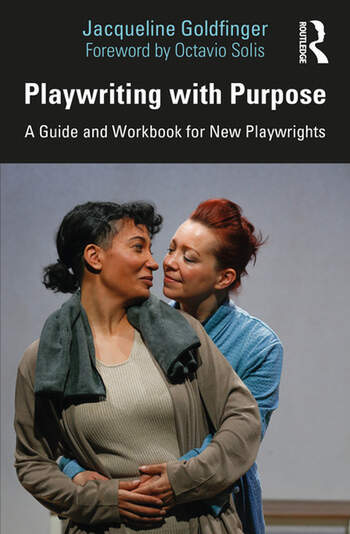
Jacqueline Goldfinger
The most significant dramaturgical challenge of the past year has been writing, and
having approved, a book
proposal. In the book, I document my dramaturgical and playwriting practices, and
share exercises to help
emerging artists stretch and grow. However, creating the proposal materials was more
challenging than
writing the book! I would like to share a 5-8 minute video on how to create book
proposal material that
shines, so that those looking to propose a new book on practice will have an
insider’s look at the process,
which will hopefully help them create stronger proposals for their own work.
El desafío dramaturgístico más significativo del año
pasado fue escribir y,
aún cuando había sido aprovada, asegurar una publicación. En
este libro, documento mis
prácticas dramatúrgicas y dramaturgísticas, y comparto
ejercicios para ayudar a los
artistas emergentes a estirarse y crecer. ¡Sin embargo, crear los materiales
de la propuesta fue
más desafiante que escribir el libro! Me gustaría compartir this video
de 5-8 minutos sobre
cómo crear material para una propuesta de libro que brille, para que aquellxs
que buscan proponer un
nuevo libro sobre la práctica (de dramaturgismo) tengan una visión
interna del proceso, lo que
con suerte les ayudará a crear propuestas más sólidas para su
propio trabajo.
Live Q & A at Discussion Groups
Dramaturgy—from the Bottom Up: exploring strategies for
bridging videos games and
live performance in asses.masses
Dramaturgismo—de
abajo hacia arriba: explorando estrategias para acortar la
brecha entre los
videojuegos y la interpretación en vivo en
asses.masses
Laurel Green, Patrick Blenkarn, Milton Lim
Our artist talk takes you inside the writer’s room of the video game for
performance, asses.masses. In
each performance of asses.masses, a video game controller sits upon the empty stage
and waits for the
audience to provide the players to start, play, and finish the game. There are no
instructions; instead, it
is up to the self-elected players of the performance to choose how to move the story
forward.
asses.masses is a character-driven digital epic following a community of pixelated
asses in their quest to
get their old farm and mining jobs back, despite the relentless industrialization in
their region. The core
conflict plays out along the division between those who reject technology and
harbour nostalgia for
‘the old ways’ and those who embrace technology as an adaptation.
In our talk, we’ll explore the dramaturgy of video game worlds, multiple
narrative threads, character
development, interactivity, decision-making, and building participatory game play
for performances.
We’ll share our process of creating and translating asses.masses episodes 1
and 2, which premiered in
Spanish at the Festival Internacional de Buenos Aires (FIBA) in March 2021, and
speak about the upcoming
development of future episodes.
This talk will be in English, with Spanish translation. For more about asses.masses
visit: patrickblenkarn.com/assesmasses
Nuestra conversación te lleva al interior del cuarto de escritores del
videojuego para el escenario:
asses.masses. En cada performance de asses.masses, unx controladorx de videojuego se
sienta en el escenario
vacío y espera a que la audiencia proporcione a lxs jugadores para comenzar,
jugar y terminar el
juego. No hay instrucciones; en cambio, depende de lxs actores auto-elegidxs del
performance elegir
cómo hacer avanzar la historia.
asses.masses es una epopeya digital que se centra en los personajes. Cada episodio
sigue a una comunidad de
burros pixelados en su búsqueda por recuperar sus antiguos trabajos
agrícolas y mineros, a
pesar de la implacable industrialización en su región. El conflicto
central se desarrolla a lo
largo de la división entre quienes rechazan la tecnología y albergan
nostalgia por “los viejos
días” y quienes adoptan la tecnología como una adaptación.
En nuestra conversación, exploraremos la dramaturgia de los mundos de los
videojuegos,
múltiples hilos narrativos, desarrollo de personajes, interactividad, toma de
decisiones y
construcción de juegos participativos para performance. Compartiremos nuestro
proceso de
creación y traducción de asses.masses episodios 1 y 2, que se
presentaron en español en
el Festival Internacional de Buenos Aires (FIBA) en marzo de 2021, y hablaremos
sobre el próximo
desarrollo de episodios futuros.
Live Q & A at Discussion Groups
Launching Chalk Musical Theatre Dramaturgy in a Pandemic
Lanzar
Chalk Musical Theatre
Dramaturgy durante una pandemia
Ellie Coote and Deborah Vogt
Chalk Musical Theatre Dramaturgy launched in May 2020. Co-creators Ellie and Deborah
had plans to create a
company specializing in dramaturgy for musical theatre writers. Launching two months
into the first UK
lockdown wasn’t part of the plan.
Our presentation about Chalk Dramaturgy will talk about how launching in lockdown led
to some of our core
practices: our flexible payment structure, our international partners and
collaborators, and our plans to
become a dual-national company.
One year later, we can share how the pandemic has influenced our business practices,
relationships, and
ability to grow as artists and dramaturgs. We will also dive into our goals of
operating as an international
literary department and our plans for facilitating further cultural exchange. We are
proud to be the
UK’s first dramaturgical duo focusing specifically on new musical theatre,
working with writers and
partners in four different countries and we would love to share our learnings from
the past year at the LMDA
2021 Conference.
Chalk Musical Theatre Dramaturgy se lanzó en mayo del 2020. Sus co-creadoras
Ellie y Deborah
tenían planes de crear una compañía especializada en
dramaturgia para teatro musical.
Lanzar dos meses después del primer confinamiento en el Reino Unido no era
parte del plan.
En esta presentación sobre Chalk Dramaturgy hablaremos sobre cómo la
experiencia de lanzar el
proyecto durante el confinamiento nos llevó a crear nuestra estructura
respecto a: formas de pago
flexibles, acercamientos a colaboradores y socios internacionales y también a
pensar en planes para
convertirnos en una compañía de doble nacionalidad.
Un año después, podemos compartir cómo la pandemia
influenció nuestro modelo de
negocios, relaciones y nuestra habilidad de crecer como artistas y dramaturgistas.
También
indagaremos en nuestros objetivos para operar como un departamento literario
internacional y nuestros planes
para facilitar futuros intercambios culturales. Estamos orgullosas de ser el primer
dúo
dramatúrgico británico especialmente enfocado en el nuevo teatro
musical, de trabajar con
escritores y colegas de cuatro diferentes países y nos encantaría
compartir nuestros
aprendizajes del año pasado en el Congreso LMDA 2021.
Dance Dramaturgy and ASL: Creating Bridges With Embodied
Communication
Dramaturgismo entre danza y lenguaje de
señas americano: creando
puentes con la comunicación corporalizada
Susanna Bezooyen, Anne Post and Nick Fife
Both dance and sign language are forms of embodied communication, yet often the
latter is forgotten when
dance is created. In this presentation, we first identify some of the similarities
between dance and
American Sign Language (ASL). Next, we explore a few basic dramaturgically based
principles we can use to
help to facilitate the combining of these “languages” of the
body. We offer practical
ideas and examples of successful ASL integration into arts creation, showing how the
abilities of those who
are deaf or hard of hearing can, and does, enrich artistic works. Finally, we
discuss how, through the
dramaturgical process, we can facilitate advocacy for accessibility and inclusion in
dance. All this is for
the intent of enriching physical performance, broadening audiences and bridging
existing gaps related to the
enjoyment of those performances. The main panel consists of deaf theatre educator
and practitioner Anne
Fife, her son, a hearing dance educator who also knows ASL, and dance
dramaturg/facilitator Susanna
Bezooyen. Other guests and artists will also be referenced and featured. Be prepared
for an exciting journey
as we learn and discover together a dramaturg’s world full of artistic
movement, physical
communication, challenges, triumphs, humor, and most of all heart.
La danza y el canto son formas de comunicación corporeizada, sin embargo la
segunda se olvidó
cuando el baile fue creado. En esta presentación, identificaremos algunas de
las similitudes entre la
danza y el American Sign Language (Lenguaje de Señas Americano).
Después exploraremos algunos
principios fundamentales de la dramaturgia y cómo los podemos usar para
facilitar la
combinación de estos lenguajes del cuerpo. Ofreceremos ideas y ejemplos de
formas exitosas para
integrar el lenguaje de señas americano en la creación
artística, demostrando
cómo las habilidades de las personas sordas o con problemas de
audición enriquecen el trabajo
artístico. Finalmente discutiremos cómo a través del proceso
dramatúrgico,
podemos facilitar la accesibilidad e inclusión en la danza. Todo esto con el
propósito de
enriquecer el performance físico, ampliar las audiencias y cerrar las brechas
que existen para que
todxs puedan disfrutar del performance. En el panel está conformado por la
educadora y practicante de
teatro para sordos Anne Fife, su hijo, un educador de danza auditiva que conoce el
lenguaje de señas,
y la dramaturga/facilitadora de danza Sussana Bezooyen. Nos
acompañarán y mencionaremos a
otros artístistas.
Prepárate para aprender y descubrir junto a nosotrxs el mundo de la
dramaturgia del movimiento, la
comunicación física, los retos, hallazgos, humor y sobre todo del
corazón.
Live Q & A at Discussion Groups
A Dramaturgy in/of The Digital
Dramaturgismo en/de lo
digital
Jordan Ealey
This paper offers methods and methodologies for digital dramaturgical practice.
Specifically, I draw from
black digital humanities, black feminist theory, and dramaturgy to outline some ways
to practice black
digital dramaturgy. I also pull from my own experience working as a dramaturg both
in production and new
play development and demonstrate my own personal approach to black digital
dramaturgy.
Este artículo ofrece métodos y metodologías para la
práctica dramaturgismo
digital. Combinando aspectos de humanidades digitales negras,
teoría feminista
negra y dramaturgismo para delinear algunas formas de practicar
dramaturgismo digital
negro. También aprovecho mi propia experiencia trabajando como
dramaturgista tanto en la
producción como en el desarrollo de nuevas obras y demuestro enfoque personal
sobre la el
dramaturgismo digital negro.
A Truly Queer Cast: LGBT+ Actors’ Perceptions of Implicit and Explicit Bias in Theatre
Casting
Un elenco verdaderamente queer: percepciones de actores/actrices LGBT+ sobre los sesgos implícitos y explícitos en el
casting teatral
Emma Catanzaro
There is currently minimal information available about casting in theatre, especially with regard to LGBT+
actors. This study provides better qualitative evidence to understand the extent to which one marginalized
population experiences bias in the casting process. While the casting of trans actors is being widely
discussed in the popular media, little data exists to support or contradict the claims made there. For
instance, the first popular series to focus on trans issues, Transparent, chose a cisgender (identifying
with their gender given at birth), heterosexual man to represent the trans female character. The series was
criticized for not casting a trans actor in the role. Such stories are, however, anecdotal and do not
necessarily represent larger patterns. By studying a larger population of specifically theatre actors in one
particular geographical area, this study provides evidence for how often and to what extent actors feel they
have experienced implicit bias. Because casting processes are subjective, there is no way to measure if the
actors had, in fact, experienced discrimination. This study thus measures only the subjective extent to
which respondents believe they experienced bias.
Actualmente, la información disponible sobre el casting en el teatro es mínima, especialmente
en lo que respecta a los actores LGBT +. Este estudio proporciona una mejor evidencia cualitativa para
comprender hasta qué punto una población marginada experimenta sesgos en el proceso de
selección de casting. Si bien el casting de actores trans está siendo ampliamente discutido en
los medios populares, existen pocos datos que respalden o contradigan las afirmaciones hechas allí.
Por ejemplo, la primera serie popular que se enfoca en temas trans, Transparent, eligió a un
actor cisgénero (identificándose con su género al nacer), un hombre heterosexual para
representar como protagonista a una mujer trans. La serie fue criticada por no elegir a un actor trans en el
papel. Sin embargo, estas historias son anecdóticas y no necesariamente representan patrones
más amplios. Al estudiar una población más grande de actores específicamente de
teatro en un área geográfica particular, este estudio proporciona evidencia de con qué
frecuencia y en qué medida los actores sienten que han experimentado un sesgo implícito.
Debido a que los procesos de casting son subjetivos, no hay forma de medir si los actores, de hecho,
experimentaron discriminación. Por lo tanto, este estudio mide solo el grado subjetivo en el que los
encuestados creen que experimentaron sesgos
Live Q & A at Discussion Groups
The International Dramaturgy Lab
El Laboratorio Internacional de Dramaturgismo
The Partner Organizations
Las organizaciones colaboradoras
Hanna Slattne, Bryan Moore, Martha Herrero-Lasso, Megan Johnson, Catherine Bellachy,
Jonathan Meth and Sarah
Sigal
UK, US, Canada, Finland, Denmark
Meet the partner organizations behind the The International Dramaturgy Lab. Hear
about the background to the
project and to the collaboration across borders and time-zones that made it happen.
Seven unique
organizations worked tirelessly to facilitate an experience for our members that
focussed on dramaturgy and
the needs and interests of dramaturgs: The Dramaturgs’ Network UK; Literary
Managers and Dramaturgs of
the Americas (LMDA) USA, Canada, and Mexico; The Fence International Network; STOD
Finland; and the Danish
Dramaturg Network. Through the IDL we connected 93 Dramaturgs in 14 individual
groups of 3 to 8 people each
from five different continents-North America, South America, Europe, Asia, Oceania.
Conoce a las organizaciones miembro detrás del Laboratorio Internacional de
Dramaturgismo.
Entérate del contexto detrás del proyecto y la colaboración a
través de
fronteras y husos horarios que la hicieron posible. Siete organizaciones trabajaron
incansablemente para
facilitar la experiencia de nuestrxs miembrxs quienes se han enfocado en el
dramaturgismo y en las
necesidades y los intereses de dramaturgistas: el Dramaturg’s Network UK;
Literary Managers and
Dramaturgs of the Americas (LMDA) EUA, Canadá y México; The Fence
International Network; STOD
Finland; y el Danish Dramaturg Network. A través del LID conectamos a 93
dramaturgistas en 14 grupos
individuales de entre 3 a 8 personas de cinco continentes: América del Norte,
América del Sur,
Europa, Asia y Oceanía.
The Mystery of Rachel Sinclair
Walter Byongsok Chon, Davide Giovanzana, Rachel Parish, Tania Santos
U.S.A., Finland, Mexico
Rachel Sinclair, a Canadian journalist and creative writing teacher, disappears from
her home after devouring
eight watermelon. Her last social media post is a verse from “Arirang,”
the Korean folk song.
Chris Jung, a Korean detective is brought in to investigate the case (Episode 1).
Chris enters
Rachel’s home and notices rinds of watermelon, a penis, Frida Kahlo paintings,
poems about love and
performance, and a manuscript about Mexican female journalists. He wonders if Rachel
disappeared in Mexico
(Episode 2). He feels he is inside Rachel Sinclair and perceives, in multiple
languages, what it means to
disappear in Mexico (Episode 3). Rachel is in a farm in an unspecified space. She
reads The
Farmer’s Almanac and plants seeds. She encounters a farmer who might
be Chris Jung. The two
communicate while watching the clouds. They harvest the crop and sing
“Arirang” together
(Episode 4).
Cocktail Hour Ninjas
Rafael Duarte Oliveira Venancio, David Jiménez Sánchez, Jarkko Lehmus
Brazil, Mexico, Finland
Three dramaturgs from three different continents with a completely open brief of
creating a project together.
David is from Mexico, Rafael from Brazil and I’m Jarkko from Finland.
It’s clear that language
or cultural background didn’t connect us. Traditional and verbal was not the
way forward, so ẃe
decided to give ourselves a challenge to explore our individual working practices
and cultural contexts
through creating a non-verbal adaptation of a part of a classic we all knew: Henrik
Ibsen’s The
Lady from the Sea.
Disability, Access and Dramaturgy
Discapacidad, acceso y
dramaturgismo
Kaite O’Reilly, Pamela McQueen, Merlin Simard, Mark Swetz
UK, Ireland, Canada
A brief introduction to some of the topics we discussed regarding how dramaturgy may
address questions of
disability and access. The presentation concludes with several short provocations to
consider in regard to
your own practice.
I wear glasses too
Yo también uso lentes
Finn Lefevre, Neske Beks, Claudia Rodríguez, Alja Gudzevic, Anne Karyna
Bakan, Joanne Skapinker
US, Germany, Greece, Spain, UK, Mexico
Our shared glasses became a metaphor for the lenses we wanted to explore—how
do we each see the world
through our own contexts? What are our shared lenses? We came to focus on
gender—the experience of
living in a gendered body, performing gender, feminism, gender in language, etc.
This video presentation is
a collage of the ways each of us has responded to this prompt: some visually, some
with poetry, some with
prompts or exercises
Constellations
Constelaciones
Laurel Green, Pauliina Hulkko, Elizagrace Madrone, Stefanie Schmitt, Hanna Slattne,
David Quang Pham,
Dimitar Uzunov
Canada, Finland, US, Austria, Northern Ireland, Bulgaria
We are adjusting to a change of scale and a change of place; we imagine each other as
celestial beings,
looking for new rituals. We are navigating and telling stories by the stars,
imagining and describing our
own cosmology. We are preoccupied with sensory elements of dramaturgy and cognitive
science. Responding to a
feeling of being adrift (where to gather, to work, to perform, to meet an audience,
to create, to tell
stories), we have re-drawn, and re-centred our maps. This has been a space of
expansion, an activated space,
a space to practice. We locate and reckon with chaos. How do we use dramaturgy to
make meaning, perceive the
world, and create new myths? In our presentation, we’ll share the digital
wayfinding that has brought
us to a thematic exploration on a Miro board and an immersive custom-built Gather
space.
Lost in Translation
Perdidos en la traducción
Sarah Sigal, Liam Rees, Cassidy Kepp, Daniela Atiencia, Bruno Zamudio, Lewis Fender
UK, Germany, USA, Canada, Mexico
Conceptually, we started by describing our dramaturgical practices, which led to a
discussion about dramaturgy and what it means in different countries and cultural
contexts. This then led to a shared interest in dramaturgy in unconventional spaces,
with some examples being ‘Drag Race’, the US Presidential Inauguration
and Putin’s dramaturg. We started to wonder how dramaturgy can and does
function outside theatre and performance. What ‘counts’ as dramaturgy?
How is meaning made dramaturgically and who makes it?
We are planning a podcast series on dramaturgy, meaning-making and storytelling
outside theatre. There will be between 3-6 episodes, each led by a pair from the
group. In this way, we’ll explore how our own identities and perspectives
influence our practice. We may invite guest speakers and experts to talk about each
topic. This presentation is the first episode in the series.
The podcast will be recorded in English and Spanish.
Conceptualmente, comenzamos describiendo nuestras prácticas
dramatúrgicas, lo que llevó a una discusión sobre la
dramaturgia y lo que significa en diferentes países y contextos culturales.
Esto llevó a un interés compartido en la dramaturgia en espacios no
convencionales, con algunos ejemplos como “Drag Race”, la inauguración
presidencial de Estados Unidos y el dramaturgista de Putin. Empezamos a preguntarnos
cómo la dramaturgia puede funcionar y funciona fuera del teatro y la
representación. ¿Qué “cuenta” como dramaturgismo/dramaturgia?
¿Cómo se construye el significado dramatúrgicamente y
quién lo hace?
Planeamos una serie de podcasts sobre dramaturgismo, creación de significado y
narración fuera del teatro. Habrá entre 3 y 6 episodios, cada uno
dirigido por una pareja del grupo. De esta manera, exploraremos cómo nuestras
propias identidades y perspectivas influyen en nuestra práctica. Podemos
invitar a oradorxs invitadxs y expertxs para hablar sobre cada tema. Esta
presentación es el primer episodio de la serie.
El podcast se grabará en inglés y español.
Anastasia Polychronidou, Kim Yaged, Lynde Rosario, Olga Macrinici
Anastasia Polychronidou, Kim Yaged, Lynde Rosario, Olga Macrinici
Greece, USA, UK
The presentation includes reflections and feedback, sharings of art and ideas, as
well as our collection of thoughts from throughout our time together during the
International Dramaturgy Lab.
Serendipity Strategies
Estrategias para el serendipity
Fiona Graham, Maria Kilpi, Fatma Sarah Elkashef, Brian Quirt, Ville Kurki
UK, Finland, Canada
Over the last few months we have engaged in a series of serendipitous conversations.
No plan or agenda. Just
a commitment to be in the moment together. Through these connections we have made
many discoveries, but most
of all enjoyed the support generated by sharing our experience in pandemic times.
These conversations have
included a serendipitous discussion (or two) about the role of serendipity in our
creative work.
We’ve explored the ways serendipity informs our practice as dramaturgs. Why is not
knowing important? How can
we cultivate the art of finding what we are not seeking?
Riffing on Brian Eno and Peter Schmitt’s Oblique
Strategiesand Pagan Kennedy’s article How to Cultivate the Art of Serendipity, this conversation
will explore
possibilities for serendipity in creative development and some of the tools and
strategies we each have
incorporated into our work to put the focus on and discovery and process rather than
certainty and product.
Timezone for Seven
Zonas horarias por siete
Ulrike Syha, Seda Ilter, Janice Poon, Jihye Kim, Beatriz Cabur, Abraham David
Martínez Orozco, Kim Komljanec
Germany, UK, Hong Kong, South Korea, Mexico, Slovenia
After our group finally managed to solve the riddle of time zones, we have been
meeting on a regular basis
(every week or every other week). Early on, we agreed to focus on the topic of
“Digital
Theatre“. At each meeting, one of us gave a presentation or devised a workshop
revolving around the
topic. Soon, a very vivid conversation started to evolve.
For IDL presentation, we decided to put together a short video. We hope to give you
not only an overview of
the specific aspects we have been discussing in search of a dramaturgy / taxonomy of
digital theatre (and
our attempt to define the what “digital theatre” really is), but also of
the fantastic questions
and dialogues that sprung from our IDL experience. We hope to continue our meeting
in the future, albeit on
a less regular basis. Enjoy our video!
Dramaturgy of Fragility
Dramaturgismo de la fragilidad
“Dramaturgy of
Fragility” on are.na
Intisar Awisse, Sarah Dickenson, Michael Feldman, Henriikke Himma, Eric Kildow
Canada, USA, Finland, UK
As a group, a shared theme we have identified is “The Dramaturgy of
Fragility” — what is the role of dramaturgy in healing and rebuilding
the sector in the light of the pandemic? How can we serve and support a new
generation of theatre makers at risk at being lost? How can we use our skills to
reach and empower? How can we reconfigure relationships between audiences,
communities and makers? We’re using the following framework as a starting
point for the discussion: What did this idea spark off in us? What can we offer
others in terms of exploring this subject? What do we request from others in this
exploration?
Translation Group
Grupo de Traducción
Michele Costantini, Yoni Oppenheim, Cobina Gillitt
Wales, USA
Following the sharing of work, each participant wrote a statement about what had
drawn them to translation and how working as a Dramaturg has been an influence.
Later Michele and Yoni continued the conversation in a series of Zoom meetings from
which Michele began conceiving a translation themed project she will develop once
IDL ends.
Dramaturging the Phoenix Forum
Foros de el dramaturgismo del Fénix
To amplify the collection of essays
inaugurated at the beginning of the pandemic, LMDA seeks further
dramaturgical responses — videos, creative works, and social media threads, other
essays, among other formats — that boldly inspire, provoke, and explore theatre’s
potential to transform through global crisis. These DTP panels are also part of
LMDA’s conference asynchronous virtual content
Para ampliar la colección de ensayos
inaugurada al comienzo de la pandemia, LMDA busca más respuestas de
dramaturgistas — videos, trabajos creativos e hilos de redes sociales, otros
ensayos, entre otros formatos — que inspiren, provoquen y exploren audazmente el
potencial del teatro para transformarse a través de crisis global. Estos paneles de
DTP también forman parte del contenido virtual asíncrono de la conferencia de LMDA
Dramaturgy and Translation in Canada
Dramaturgismo y
traducción en Canadá
Catherine Ballachey, Pedro Chamale, Derek Chan, Johanna Nutter, Carmela Sison,
Yvonne Wallace
Catherine Ballachey, Board President of LMDA Canada and
Administrative Director of Théâtre la Seizième, will host the
following artists:
Pedro Chamale was born and raised on treaty 8 territory,
colonially known as Chetwynd, BC, and now resides and creates on the unceded
and traditional lands of the xʷməθkwəy̓əm (Musqueam), Skwxwú7mesh
(Squamish), and Səl̓ílwətaɬ (Tsleil-Waututh) Nations. Pedro is a
director, playwright, performer, co-founder and co-artistic director of rice
& beans theatre, was the Artistic Resident at Neworld Theatre in 2014,
guest curator of the 2018 rEvolver Festival and one of the playwrights in
the 2019 Playwright’s Lab at the Banff Centre. Pedro was part of the
second cohort of Banff’s Arts and Culture Leadership, is a co-founder of the
Canadian Latinx Theatre Artist Alliance, sits on the Latinx Theatre Commons
steering committee and was part of Director’s Lab North in 2020.Derek Chan (陳嘉昊) grew up in colonial Hong Kong and currently
lives and works on the unceded and ancestral lands of the Musqueam,
Squamish, and Tsleil-Waututh Nations, colonially known as Vancouver. An
award-winning multilingual playwright, director, translator, and performer,
he has been founding co-artistic director of rice & beans theatre since
2010. Derek was an artist in residence at the National Arts Centre English
Theatre Department in the 2019/20 season, developing yellow
objects, a play in support of the ongoing pro-democracy movement in
Hong Kong.Johanna Nutter is a bilingual straight white female settler
theatre artist from Tio’tia:ke (Montreal). She collaborates, performs,
writes, translates, curates, directs, produces, and educates. In 2016, she
formed creature/creature, consolidating her passion for negotiating the
delicate spaces between people, subjectivities, and artistic practices.
Co-creations include my pregnant brother/my playwright sister
(Soho, Centaur, Cultch, Passe Muraille, Licorne, etc) and continuing work
with Algonquin art star Nadia Myre, STRIKE/THRU coming to the MAI in June
2021.Carmela Sison is a novice translator currently working on
her first work, a Tagalog adaptation of Jovanni Sy’s A Taste of
Empire. She’s learning a lot along the way and thankful that
she gets to fall in love with her mother tongue through this
experience.Yvonne Wallace (Ucwalmicw) is from the Lil’wat Nation
and graduated the Bachelor of Liberal Arts degree program at Capilano
University. She is currently working on her Master’s in Education
Leadership at UBC. Her enthusiasm for theatre began while she worked at The
Centre for Indigenous Theatre. Later, she graduated with honours from Humber
College Theatre Acting program. She has written three plays Smothered
Sweetly, The Last Dance, and ustzan (to make things
better), a play dealing with language reclamation and her first
language fluency progression.
Critic / Dramaturg Relationship
La relación entre el
crítico y el dramaturgista
José Solís, David John Chávez
Continuing our conversations on BIPOC Reflections, this week’s “Dramaturging the
Phoenix” will feature José Solís, founder of the
BIPOC Critics Lab and David John Chávez, vice chair of the
American Theatre Critics Association, to discuss what’s happening at present in
their community as well as answer questions on how we can move forward beyond
statements and promises to change. In line with the Phoenix series to think about
ways dramatic criticism and dramaturgy can bring forward progress to our communities
in these difficult times, and the steps we can take to move towards better BIPOC
allyship.
#LMDA2021 Conference Guidelines
LMDA’s Values Statement
LMDA promotes the creation of stories that reflect a broad spectrum of authentic
experiences in our diverse
global community. We uphold equity, diversity, and inclusion as our foundational
values, and we recognize
and examine the intersectionality of our society. We are committed to provoking,
addressing, and advocating
for issues of justice, equity, diversity, inclusion, and land/territory. Our
membership is dedicated to
fostering an environment of respect, celebrating difference, and seeing the
principles above reflected in
all aspects of our organization.
#LMDA2021 Conversation Practices
Below are recommendations for applying LMDA’s Values to our virtual
conversations
during this conference,
and beyond. We welcome your further suggestions. These practices are adapted from NNPN’s Community Agreements, Claudia Alick
CALLING UP and the Northeast
Sustainable Agriculture
Working Group.
General Conversation Best Practices:
- Speak from your own experience (use “I” statements).
- Allow yourself and others the freedom to speak in rough draft.
- Assume positive intent in others’ statements and acknowledge the impact of
your statements on others.
Throw sunshine, not shade. - It’s okay to disagree – seek the value in others’ truths and
perspectives. - Listen to understand, not for your turn to speak.
- Employ W.A.I.T. – Why Am I Talking? / Why Aren’t I Talking? Ask
yourself: is this going to move
the conversation forward? - Silence can be productive. In order to create space for all voices, sometimes we
must allow the space to
grow in silence. - When we engage with complex topics, we likely won’t reach closure, and
that’s fine. - No one knows everything – together we know a lot.
- It’s our shared responsibility to create a space that invites listening,
thought, and discussion. Take
care of yourself, each other, and the space. Let us know what we can do to
support
you.
Additional Videoconference Practices:
- Mute by default (to avoid alerts and dings), unmute yourself when you have
something
positive to contribute
or question. - Be as present as possible and support others in doing the same. Faces are
important
– use your video
when you have the capacity. - Be human – take care of your needs! Stretch, eat, drink, use the restroom,
rest. Do not apologize for
the children, partner, parent, pet, with whom you are sharing space. Check in
with
yourself before each
session and make sure you have the capacity to attend. If you discover you
don’t, that is okay.
#LMDA2021 Live Chat Guidelines
We encourage comments and conversation during all sessions. Feel free to use the
WebEx
chat like Twitter: pulling
resonant quotes, sharing links/resources, asking questions, etc. However, our
moderators
reserve the right to
remove any harmful or otherwise inappropriate posts, for example:
- spam from a human or a robot
- personal attacks on another user
- doxxing (i.e., revealing someone else’s personal
information) - illegal activities (links to illegal downloads, ways to steal
service, etc.) - pornography
- racism, sexism, and other discrimination
- trolling (i.e., posting of inflammatory, digressive, or
off-topic
messages with the intent
of disruption) - commenting on someone’s physical appearance, voice, or style
(including comments
intended as complimentary)
Note that this is not a comprehensive list. Above all, our team of moderators will
work
to keep conversation here
friendly, engaging, helpful, and productive. If a comment or forum post is harming
that
endeavor, we’ll
take action, and repeat offenders may be banned from the conference. If you
experience
harassment in any form
during the conference, please email anti-harassment@lmda.org.
Lineamientos del Congreso #LMDA2021
Declaración de valores LMDA
LMDA promueve la creación de historias que reflejen una amplia gama de
expresiones auténticas dentro de nuestra diversa comunidad global. Somos
partidarixs de la equidad, diversidad e inclusión como parte fundamental
de nuestros valores. Reconocemos y examinamos la interseccionalidad de nuestra
sociedad. Estamos comprometidxs a abordar, defender y provocar el derecho a la
justicia, la equidad, la diversidad, la inclusión y la
reconciliación territorial. El trabajo de nuestrxs miembros fomenta un
ambiente de respeto, celebra nuestras diferencias y hace valer los principios de
LMDA en cada aspecto de la organización.
Prácticas para la conversación #LMDA2021
Debajo encontrarás recomendaciones para aplicar los valores de LMDA a todas
las conversaciones virtuales que se lleven a cabo durante y después del
congreso. Estamxs abiertxs a recibir comentarios y recomendaciones al respecto.
Estas prácticas vienen de Acuerdos Comunitarios de la NNPN, El llamado de
Claudia Alick y del Grupo
de trabajo de Agricultura Sostenible del Noreste.
Mejores prácticas para conversaciones generales:
- Habla desde tu propia experiencia (usa declaraciones desde el “Yo”)
- Permítete y permite a otros la libertad de hablar en
“borrador”. - Asume intenciones positivas de las declaraciones de lxs otrxs y reconoce el
impacto de tus comentarios en lxs demás. Lanza luz, no sombra. - Está bien estar en desacuerdo – Busca el valor en las verdades y
perspectivas del otrx. - Escucha para entender, no solamente para atender tu turno.
- Pregúntate ¿Por qué estoy hablando? / ¿Por
qué no estoy hablando? Cuestiónate: ¿lo que estoy diciendo
está impulsando la conversación? - El silencio puede ser productivo. Para permitir que todas las voces sean
escuchadas algunas veces debemos permitir que el espacio crezca en
silencio. - Cuando nos enganchamos con temas complejos, es normal que no busquemos cerrar la
conversación, y eso está bien. - Nadie sabe todo – juntxs sabemos más.
- Es responsabilidad de todxs crear un espacio que invite a la escucha, al
pensamiento y a la discusión. Cuídate, cuida al otro y al espacio.
Haznos saber qué podemos hacer para apoyarte.
Recomendaciones adicionales para las prácticas en videoconferencia:
- Silencia tu micrófono (para evitar alertas o que los moderadores te
silencien), abre tu micrófono cuando tengas algo positivo que aportar o
preguntar. - Mantente lo más presente posible y ayuda a otros a hacer lo mismo. Los
rostros son importantes – usa tu video cuando tengas las posibilidades de
hacerlo. - Se humano – ¡cuida tus necesidades! Estírate, come, toma
agua, ve al sanitario, descansa. No te disculpes por lxs nixs, pareja, padres,
mascotas o cualquier persona con la que compartas espacio. Antes de atender la
sesión revisa que te se posible asistir. Si descubres que no lo es
está bien.
Guía para chats en vivo #LMDA2021
Siéntete libre de usar el chat de WebEx como si fuera Twitter: deja
comentarios que resuenen, comparte links/recursos, haz preguntas, etc. Sin embargo,
nuestrxs moderadorxs reservan el derecho de eliminar cualquier comentario
inapropiado o hiriente, por ejemplo:
- spam de un humano o robot
- ataques personales a otrx usuarix
- doxxing (es decir la revelación de datos personales de
alguien más) - actividades ilegales (links a descargas ilícitas, formas
de robar servicios, etc.) - pornografía
- racismo, sexismo o cualquier otra forma de
discriminación - ofensas (por ejemplo publicaciones provocativas, comentarios
fuera de lugar que se hagan con el intento de interrumpir, etc.) - comentarios acerca de la apariencia física, voz o estilo
(incluidos comentarios que se hagan con la intención de halagar)
Toma en cuenta que esta no es una lista completa. Nuestro equipo de moderadorxs
trabajará para lograr conversaciones amigables, atractivas, productivas y que
aporten. Si algún comentario o publicación en el panel atenta a ese
esfuerzo, tomaremos acción, repetimos que lxs agresores serán
retirados del congreso. Si experimentas alguna ofensa de cualquier forma durante el
congreso, por favor manda un correo a anti-harassment@lmda.org.

Webex
Find some useful links to get to know the virtual platform
—
Algunos
links para familiarizarte
con la plataforma virtual
WebEx Training Links // Guías de usuario para Webex
Best Tech Practices for Online Meetings
- https://www.webex.com/content/dam/webex/eopi/assets/WebexMeetings_BestPractices.pdf
- https://help.webex.com/en-us/8zi8tq/Cisco-Webex-Best-Practices-for-Secure-Meetings-Hosts
Buenas practicas para reuniones en línea
Troubleshooting // Solución de problemas

WebSwitcher
Oral Simultaneous Interpretation
All live panels will have simultaneous oral interpretation to English or Spanish through
WebSwitcher, an app for
your mobile devices to function as interpretation receivers.
Interpretación Oral Simultánea
Todos los paneles en vivo tendrán interpretación oral simultánea a
Español o
Inglés a través de WebSwitcher, una aplicación para que tus
dispositivos móviles
funcionen como receptores de interpretación.


Directions
- Keep your mobile device (Tablet or Smartphone) fully charged.
- Have your device’s charger handy in case you need it during the meeting.
- On your mobile device download Webswitcher Pro
- Once the application is downloaded, open it and enter the
token for this
event: V-62436575 - Select your language
- Connect the headphones to your mobile device.
- Listen to your selected language through the app.
- The platform works in the background, it is recommended to lock the screen
of your device to save
battery.
Instrucciones
- Tenga cargado su dispositivo móvil (Tablet o Smartphone) al
máximo. - Tenga a la mano el cargador de su dispositivo en caso de necesitarlo durante
la reunión. - En su dispositivo móvil descargue la Webswitcher Pro
- Una vez descargada la aplicación ábrala e ingrese el
token exclusivo
para este evento: V-62436575 - Seleccione su idioma
- Conecte los audífonos a su dispositivo móvil.
- Escuche a través de la aplicación el idioma que
seleccionó. - La plataforma funciona en segundo plano, es recomendable bloquear la
pantalla de su dispositivo
para ahorrar batería.
This project is supported in part by an award from National Endowment for the
Arts.
Este proyecto es posible gracias al apoyo del National Endowment for the Arts
Sponsors