Revisiting “War, Ukraine, and American Theatre: A Call to Action”
by Alice Tufel
Revisiting “War, Ukraine, and American Theatre: A Call to Action,” by Dmitry Troyanovsky and Dan Smith, originally published in Review: The Journal of Dramaturgy 28, 1 (Winter 2022).
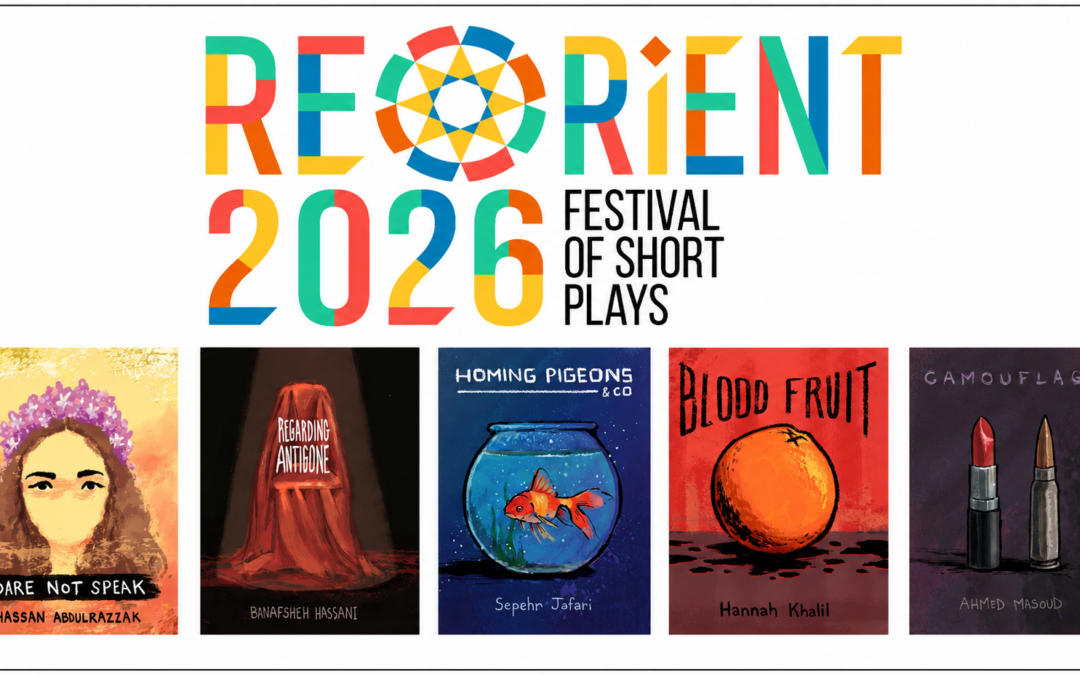
I recently saw Antigone in Analysis at La Mama Experimental Theatre — one of four Antigone-inspired plays produced so far this year in New York City alone. Recalling Sophocles’s original play and the many versions of it that have appeared through the centuries, I was struck once again by Antigone’s passion and integrity, her complete commitment to doing the right thing, even in the face of certain death.
Antigone is having quite a moment right now. It is easy to understand why: An honest woman seeking justice and willing to sacrifice her life for it pitted against an unjust law dictated by a cruel, self-interested, and tyrannical ruler; a compliant circle of cronies and sycophants; and a populace whose lives are endangered if they speak up — and all of that against the backdrop of a war that has turned sibling against sibling. Ring any bells?
Written more than 2,400 years ago, around 442 B.C.E., Antigone remains tragically relevant. Innumerable plays — too numerous to name here — have followed it through the centuries in response to tyranny, hypocrisy, injustice, cruelty, corruption, and, of course, war. Theatre, because of its communal nature, can be and often is an act of resistance and healing. As part of the Federal Theatre Project in the 1930s (an initiative of President Roosevelt’s Depression-era “New Deal” and its Works Progress Administration), for example, plays called “Living Newspapers” were written by researchers (cue the dramaturg!) based on current events. These often-controversial plays did not shy away from criticizing the government, including the Supreme Court, and they quickly drew fire from Congress. Importantly, they were also popular with audiences. In 1936, as the global tensions that led to World War II were escalating, the very first Living Newspaper, Ethiopia, focused on Mussolini’s invading forces in that country. The U.S. government shut the play down before it could be performed and, fearful of political retaliation, prohibited all stage presentations of foreign leaders. New York’s FTP director, Elmer Rice, resigned in protest.
As theatre-makers, we can take a stand — both on and off the stage — and continue to educate, enlighten, and inspire each other and our audiences to effect positive change, illuminate societal ills, and alleviate suffering where we see it.
It was in that spirit that Dmitry Troyanovsky and Dan Smith wrote their “Call to Action,” shortly after Russia’s invasion of Ukraine on February 24, 2022. Now, more than four years later, despite hopes for a quick ending, the war rages on, as war too often does. Children have lost parents and siblings; parents have lost children; partners and spouses have lost each other. As of early 2026, roughly 100,000 to 140,000 Ukrainian military personnel had been killed and 500,000 to 600,000 are wounded or missing. Civilian fatalities are estimated at more than 15,000. And approximately 10.6 million Ukrainians have been displaced from their homes.
Troyanovsky and Smith remind us that, “Historically, theatre has been a place to grapple with the most important challenges facing society.” Dramaturgs have a particularly significant role to play at this time of global turmoil: We help to shape productions and inform what happens on stage — and how it happens — to pull audiences in. We identify and illuminate theatrical works from ancient times to today that have contemporary relevance. We discover alignments between theatre pieces or potential theatre pieces and global acts of and resistance to tyranny, and we work with other theatre artists to bring those alignments to life on the stage. We engage the community. Theatre professionals have a unique power to call out injustice and to help those who are caught in a war, insisting that it never becomes normalized or accepted as inevitable.