2020 Conference / Conferencia 2020
Crossing Borders, Pt 3: On the (Digital) Threshold
—
Atravesando Fronteras,
parte 3: En el umbral (digital)
View the Conference Handbook Shop the Conference Store
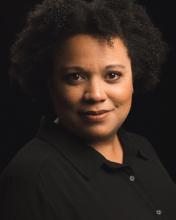 Welcome to the 2020 LMDA Conference!
I am so glad
that you are here to share virtual space with us as we embark on our first online conference. Two years ago when
we imagined the 2020 conference, this was definitely not what we were thinking! However, as dramaturgs do, we
are nimble and rose to the challenges of figuring out how to carry on the conversations that are important to us
as a field and an organization. We wanted to revamp this conference to adapt to the new circumstances,
excitements, and challenges of our current moment while also balancing the conversations we originally desired
to foster around global and, more specifically, Latinx dramaturgy. We hope that we created a conference for you
that is immediate while also forward thinking to the moment in which we all get to gather again in person in
Mexico City in 2021.
Best
Martine Kei Green-Rogers, President
Context for this conference by Mark Bly
LMDA Reconocimiento a las Culturas
Indígenas
WebEx Training Links / Guías de usuario para Webex
Oral Simultaneous Interpretation / Interpretación Oral Simultánea
Can we help? Visit the Zoom Registration
Desk.
Available 10 AM – 5 PM Eastern each day of the conference.
Live Conference / Conferencia en Vivo
Thursday June 18th, 2020
LMDA Annual General Meeting 4:30 pm ET
LMDA’s Annual General Meeting is our opportunity to review the organization’s work over the past year, hear
from members of the Executive and Board of Directors, and begin to look ahead to next year. We look forward
to hearing your voices even if we can’t gather, and your attendance is important to LMDA’s health as an
organization. The 2020 AGM will also be our opportunity to welcome the incoming President, Bryan Moore, and
his Executive members.
Conference Bars | Bares de la Conferencia 6:00 pm
ET
Friday June 19th, 2020
Dramaturging the Phoenix
Heather Helinsky, Finn Lefevre, Anne G. Morgan
 In the wake of the global theatre shutdown brought about by
COVID-19, LMDA challenged its members to
imagine
what might emerge from the ashes with an essay prompt titled “Dramaturging the Phoenix”. The call
has
elicited over 50 wonderfully diverse reflections on this unique time and its effect on and potential
for our
art. As the conversation continues to expand and deepen, we’ll be kicking LMDA’s 35th annual (and
first
virtual) conference with a roundtable discussion of the dramaturgical phoenixes rising within and
around us.
Read the collected essays
here.
Panelists
Julie Felise Dubiner
Jeanmarie Higgins
Jennifer Ewing-Pierce
Linda Lombardi
Karen Jean Martinson
Lucy Powis
Jared Strange
The Lark US – Mexico Exchange 2019 sponsored by American Theatre Archive
Project
Gabriela Román, César Enríquez, Luis Santillán y Camila Villegas
Hosted by Brenda Muñoz
Sponsored by American Theatre Archive Project
Cuatro dramaturgos mexicanos comparten y discuten de qué manera el proceso de dramaturgismo
por el que
atravesaron en Nueva York el marco del programa THE LARK US – Mexico EXCHANGE (apoyado por el FONCA
y The
Lark Play Development Center) fue determinante durante la traducción de cada una de sus obras
y para
la presentación de las lecturas dramatizadas de:
- Cósmica – Gabriela Román
- La Prietty Guoman – César Enríquez
- Autopsia de un copo de nieve – Luis Santillán
- Jacinto y Nicolasa – Camila Villegas
Four Mexican playwrights share their experience and the dramaturgical process to translate their
plays
from Spanish to English at The Lark Mexico – US Exchange 2019.
The Green Rooms: Building an inviting space for urgent conversations
online
Chantal Bilodeau and Sarah Garton Stanley
Hosted by Catherine Ballachey
Chantal Bilodeau and Sarah Garton Stanley discuss their curatorial process from the beginning of
English
Theatre’s National Arts Centre final Cycle: Reimagining the Footprint of Canadian Theatre.
From the
beginnings where travel was deemed a necessary by product of theatre creation to a moment where
movements
outside our own homes are cause for concern,these curators talk about how the form and content
content
transformed over the two years of the Climate Change Cycle into The Green Rooms,
a digital international gathering to engage with the most urgent questions of our time.
Regional Lunch / Almuerzo Regional 2:20 pm ET
Playwrights Under the Radar sponsored by Agency for the Performing Arts
Hosted by Bryan Moore
Speakers will spread the word about one of “their” playwrights — maybe one they’ve worked with or
want to
work with, or maybe one whose plays they just love — but who may not yet be on the national or
international radar.
Using the popular Hot Topics format, each presenter will get five minutes to sing the praises of a
playwright
they believe deserves a spot in the big leagues. Come discover a new “favorite,” and help spread the
word.
SpeakersPlaywrights
Vishesh AbeyratneCatherine Ballachey
President, LMDA Canada
George NelsonSusanna Bezooyen
Brigham Young University
Ikram BasraArt Borreca
Co-Head, Dramaturgy & Playwrights Workshop
The
University
of Iowa
Jonathan AlexandratosLaura Butchy
Freelance Dramaturg and Professor
Heather McDonaldAnn-Marie Dittmann
Freelance Dramaturg
Stephanie Kyung Sun Walters
Erlina
Ortiz
Iraisa Ann ReillyJacqueline Goldfinger
Playwright and Freelance Dramaturg
Founder
of Page
by Page
Levi JelksGiulianna Marchese
Literary Manager, Red Theater
Freelance
Dramaturg
Ashley Lauren RogersJen Plants
Faculty Associate, University of Wisconsin-Madison
Yilong LiuAdin Walker
Freelance Director, Choreographer, & Dramaturg
PhD
Candidate, Stanford University
Digital Civic Dramaturgy: Dramaturging the Digital City
This panel takes advantage of our digital format this summer to raise the question of what it means
to
consider the dramaturgy of the digital city. In the 21st century, the social spaces of the urban
landscape
are constructed digitally as well as physically, from online civic forums to activist networks to
digital
publics and counter-publics. Even prior to the Covid-19 pandemic, digital
“site-specific”
performances that contribute to the formation and maintenance of civic identities were being
created.
This hybrid session that is part panel discussion about digital civic dramaturgy and part participant
exploration of digital urban spaces across the globe, examining these digital spaces and theatrical
projects
from a dramaturgical perspective.
Conference Bars | Bares de la Conferencia 5:40 pm
ET
Saturday June 20th, 2020
A Real Time WriteNow Workshop
Emma Goldman-Sherman
A writing workshop in miniature, presented as a model for early new play development, and for
dramaturgs
offering online support to playwrights. Includes a discussion of the workshop structure,
sample prompts, a
demonstration of process, and Q&A.
While my workshop is a 4-hour 30 weeks/year workshop that usually runs with 15-25 people at a
time in the
room, I will briefly explain the first 90 minutes where we write and work from a prompt. I
can hand out
examples of the prompts.
Then I will hold a demonstration of the actual workshopping part (of curated material, not
what was just
written). The demonstration will take about 40 minutes and be the bulk of the time with 20
minutes left for
Q&A.
We will present an excerpt from Jessica Carmona’s Mateo en El
Barrio
A modern day re-telling of the Gospel of Matthew, this play tells the story of Mateo, (a
Rikers Island Inmate) and his cohorts experiencing transformation and profound change as
they meet a man named Jesus. As we are taken through the modern day interpretations of the
famous story, we see the harsh realities of structural racism and inequality within the US
criminal justice system, and we also see a story of redemption and possibility where you
would least expect it.
Jessica Carmona (playwright) is an Award Winning Actress and Playwright of
Afro-Puerto Rican descent. She is a graduate of NYU’s Tisch School of the Arts where
she received her B.F.A in Acting. She starred in the award winning indie
film Millie and the Lords. She recently performed the role of Odessa/Haikumom
in Water by the Spoonful at the Red Monkey Theatre Company. Her original
play Elvira-The Immigration Play was an official selection of the 2019
Strawberry One Act Theatre Festival and the 2015 NYC Fringe Festival. She is a member of
SAG-AFTRA, the Off Broadway Alliance, and the UFT. Jessica is passionate about social
justice, education, community building, her culture and her Faith in God. She believes in
the power of art to transform lives and create positive change in the world.
Hot Topics sponsored by Nightswimming
Hosted by Michael Chemers
HOT TOPICS IS BACK AND HOTTER THAN EVER!
Hot Presenters at the 2020 LMDA conference will talk about a provocative question, assertion,
issue, or
project with which they are currently (passionately) engaged to initiate conversations and
collaborations,
or to address pressing issues for dramaturgy. Speakers have just five minutes each to open a
door onto their
topic. The strict time limit allows for multiple presentations and follow-up conversations.
It also requires
careful preparation.
Speakers
Judith Rudakoff
“Re-Envisioning The Ashley Plays in the time of
COVID-19”
Amber Bradshaw
“New Play Dramaturgs as Radical Disrupters (in
the time of
COVID-19)”
Michael Evans
“Broadening the Field”
Sara Freeman
“Projects in Dramaturgy: A curricular structure
for exploration
and engagement”
LaRonika Thomas
“Dramaturgical Pedagogy of American Social
Movements through Theatre”
Catherine Ballachey
“Proving Myself Wrong”
Kalen Stockton
“Dramaturgical Pedagogy: A Case Study”
Adrian Centeno
“The Dramaturgy of Grief”
Michael M. Chemers
“The Dramaturgy of Loss, and Recovery”
The Dramaturg’s Network and The Fence:Crossing Borders
Fiona Graham, Zainabu Jallo, Adam Lenson, Jonathan Meth, Sarah Sigal, Hannah Slattne, and
Catherine Young
Using four case studies from work happening across the globe, artists and dramaturgs discuss
the artistic
implications and practical challenges of reaching across borders to create and share work.
Chaired by
Jonathan Meth of The Fence in
collaboration with The Dramaturgs’
Network.
- Choreographer Catherine Young and dramaturg Hanna Slattne share the challenges of
developing
Floating On A Dead Sea, about Palestine, in times of Covid-19. Contemplating
vantage points
across borders, confinement and physical presence in occupied territories. - Writer Sarah Sigal and director/dramaturg Adam Lenson discuss workshopping Sarah’s
play
Stills with performer Debbie Chazen, a one-woman show about women, Jews and
bootlegging during
Prohibition. Sarah and Adam transformed their working process to create a digital
performance across the
UK and the US due to CV-19. - Over eleven years the British dramaturg Fiona Graham has collaborated with New Zealand
director Stuart
Young and Hilary Halba at Otago University working with Talking House Theatre Company.
This case study
introduces the dramaturgical development processes in three verbatim theatre projects,
attempting to
cross borders of content, form, methodology and geography. - The aging diaspora is at the centre of the play We Take Care of Our Own (2019).
Three
first-generation immigrants ruminate on the interruption of intergenerational practices
by the choice to
migrate to Europe, Writer Zainabu Jallo will highlight how four distinct locations and
production teams
enriched the writing process for this play.
Tiny Humans, Big Wonder:
Dramaturging emotional support, linguistic
boundaries, and
theatre for the very young
Taylor Jane Cooper, Karen Jean Martinson, and Jane Shiermeyer
Tiny Humans, Big Wonder will present the findings of two theatre-for-the-very-young
residencies, designed to
work with young people as dramaturgs. Using nature as metaphor to explore how we can create
a better world
together, these very young dramaturgs were immersed in a fantastic theatrical world designed
with them, just
for them. In this imaginative nature-space, they were empowered to enact their own
storylines in partnership
with adult facilitators. These residencies were a first step towards creating a
dramaturgical theory for
approaching theatre for the very young to create safe, inclusive spaces; wonder; and a
pathway for
collaborative spectatorship. Our panel will begin with a dramaturgical overview of the work
and process,
followed by a sharing of the performance created from the two theatre-for-the-very young
residencies, and
culminating in the discussion of our still-emergent dramaturgical methodology and a
consideration of the
theoretical implications of this work. There is still so much we do not know about the world
around us and
theatre for the very young. Yet we believe that by empowering very young people as
dramaturgs, we can create
theatre that allows them the freedom to create, explore, and discover the world around them.
Discussion Groups / Grupos de Discusión
These Q+As allow a chance to discuss the following asynchronous
presentations
—
Sesiones de
preguntas y respuestas acerca de los siguientes paneles asincrónicos
The Seeing Place: Black Audiences and the Racial Spectacular
Engaging Students in Global Partnership with 1,001 PLAYS
Dramaturging The Museum of the American Apocalypse in an Apocalypse
CoVIDEO Visions
Vet Tix: Using Digital Tools to Engage Veterans in Theatre
Dramaturgical Jobs Outside of Theatre
Dramaturgismo en el contexto delo hiper: hipertexto,
hipercomunicación e
hipercultura
Rocío Galicia
En esta presentación se buscará reflexionar sobre el lugar que ocupa el
dramaturgista en un
mundo que ha dejado atrás la idea de secuencialidad; donde las estructuras lineales,
jerárquicas y cerradas están siendo sustituidas por redes sin centro, en las
cuales prevalecen
los enlaces azarosos y las conexiones a-jeráquicas. El mundo se transforma y la
escena
contemporánea se erige como un espacio de representación y
problematización de estos
cambios. Si aceptamos lo anterior, ¿cuál sería el lugar del
dramaturgista?
¿cuáles son los retos epistemológicos que se le presentan?
¿qué tipo de
herramientas teórico-metodológicas son las que podrían acercar
respuestas a una escena
de estas características? Más aún, ¿cómo sería la
mediación
entre la producción escénica y un espectador que transita entre el Big Data,
el Big Brother
digital y el acceso a la hipercomunicación?
Re-Building the new Play Exchange for Dramaturgs
Gwydion Suilebhan
As the Project Director of the New Play Exchange, I will work with a team of dramaturgs who
are also
experienced NPX users to define a new feature: the ability to post and sell dramaturgy
packets for new
plays. The success of the NPX in our increasingly digital, increasingly distributed
environment requires on
our ability to solicit input from potential users, building the tools they need. Help us
help you do your
job, especially under new circumstances.
Conference Bars | Bares de la Conferencia 5:40 pm
ET
Asynchronous Content / Contenido Asincrónico
The Seeing Place: Black Audiences and the Racial
Spectacular
Amissa Miller
There is power in the gaze. But what burdens of hypervisibility – being overseen – do
we place on Black
audience members in moments of explicitly racialized performance? This paper weaves
my experience as a Black
theatre artist, educator, and audience member attending a performance of Jackie
Sibblies Drury’s
FAIRVIEW with the theoretical frameworks of Lewis Gordon, bell hooks, Simone Browne,
Christina Sharpe, and
other Black scholars to address the permeability of the hypervisible/invisible line
in the experiences of
Black audiences, with a particular focus on performances that engage with what
Jonathan Markovitz names
“racial spectacle.” I argue that this and other moments of racial
spectacle in the theatre
center the viewing experiences and racial awareness of white audiences, rather than
empowering Black
spectatorship. When this process is imposed upon Black audiences, we objectify and
further alienate those
who may already feel implicitly hyper/invisible in theatre spaces. This paper
illuminates the impact of
these moments and imagines how we as a field might create, contextualize, and
resource work that centers the
Black gaze when choosing to offer to our audiences the racial spectacular.
Live Q & A at Discussion Groups
(Virtual) Dramaturgy in Mexico City:
El ( virtual ) dramaturgismo
en la Ciudad de
México
Eréndira Itzel Santiago Llamas
Virtual is a word that designates something that only exists apparently and that is
not real, or that does
not happen in the real world. It is also a word that makes me think about the way
dramaturgy has been
developed in Mexico City. Most of the people that are named dramaturgs nowadays,
here in Mexico, learned
about dramaturgy through texts, videos, or interviews. And in the best of scenarios
we have learned about
the work after getting in touch with a professional abroad, and after that,
practicing it. Therefore, in the
beginning, dramaturgy was taught and learned in Mexico virtually.
Engaging Students in Global Partnership with 1,001
PLAYS
Kristin Johnsen-Neshati and Nicholas M. Horner
This year, 1,001 PLAYS forged its first international exchange of student plays,
culminating in two evenings
of staged readings and live-chat discussions with their counterparts and distant
audiences (the first in
Fairfax, VA, USA, and the second in Florianópolis, SC, Brazil). This year’s
theme was TOMORROW, and
our playwrights submitted short works engaging this idea. What are the surprises,
challenges, and rewards of
working across cultures, borders, and languages in student-centered collaboration?
What steps were
remarkably hard, or surprisingly easy? What does it mean to value process over
product cross-culturally?
What did we learn from our students and global academic partner? What insights will
we carry forward next
year?
Live Q & A at Discussion Groups
Dramaturgy for Designers:
how the research is essential to
our work (especially for
contemporary shows)
Sarah Lee Chic
Let’s be real: Dramaturgy needs to be utilized by all theatre artists, but how do
designers use it? How do we
research light and sound? How does it help for contemporary plays? How are designers
dramaturgical research
different than the dramaturgs? And how do we work with dramaturgs? Additional
discussion includes
international work & help an audience member understand the play even if the
language in the script is
not a language they are fluent.
A Dramaturgy of (Re) Presentation: Manuscripts for the
Masses
Shadow D Zimmerman
In lieu of my deeply materialist reading of Jack Kerouac’s The Beat Generation
(1957), I hope to use
this opportunity to reconsider my object of study in a manner deemed topically
necessary by the forced
distance of our current pandemic: engaging Michael Chemers’ definition of the
dramaturg as one who
“[transforms] that inert script into a living piece of theater” (3), I
look to interrogate the
intersections between dramatic research and literary studies dramaturgically. How do
we make the manuscript
a “living piece of theatre”? Too often, these pieces of our theatrical
past (and potential
present) are inaccessible, behind glass or in climate-controlled storage. My
original plans for accessing
this Kerouac manuscript would have proven difficult, but COVID-19 has now made them
impossible. As one with
a deep interest in the performatic nature of historical manuscripts — the ways in
which the physical,
embodied acts of reading meant something semiotically to the reader — I will
interview materialist
scholar(s) at UW and reprographic archivists at the Rose Library to explore any
possibility of
(re)presenting manuscripts as manipulative objects for the masses, to make
suggestions for the treatment of
these artifacts as living, interactive documents through reproductive (or other)
methods.
War and Peace and Plague
Claire F. Martin
During the first week of quarantine, I composed an original two-part stage adaptation
of Leo Tolstoy’s
WAR AND PEACE for a repertory company of 14 actors (7W, 7M). It was an unplanned
endeavor, fueled by the
timely thematic resonances I detected in the novel, particularly the endurance of
communities that are
forged in love (i.e. families, friendships, teams, etc). The twofold task I set for
myself as a
playwright/dramaturg was to update Tolstoy’s narrative for a twenty-first
century American audience
while maximizing the dramatic potential of theater as the medium for that narrative.
Last week, a group of actors joined me in a full-cast online reading of my two plays.
After each reading, a
colleague facilitated a ~45-minute talkback via Liz Lerman’s “Critical
Response” model.
These two discussions yielded such provocative questions and insights that I
extended the process into an
ongoing virtual playwriting workshop. Now, in collaboration with the three actors
who read for the leading
trio in our April 7-9 sessions, I am developing my W+P adaptation through a series
of online sessions that
combine dramaturgical discussion of content and cultural relevance with new-play
scene work.
What sets these workshops apart is the necessity of the digital platform to make them
possible. I live in
Portland, OR. My actors live in San Diego, NYC, and Miami. All three of them
directly inspired my
reimagining of Tolstoy’s central trio, but in ordinary times, I probably would have
had to settle for
Skyping *one* of them into an in-person workshop with second- choice performers.
However, because this
project unfolded during the pandemic, bringing all my top-pick actors together
electronically was not an
artistic compromise but rather just a function of the workshop format itself. We are
now deep into this
virtual development work and my actor-dramaturgs are revolutionizing the way I
engage with Tolstoy’s source
material. They are responsible for so much new material, so many new moments of
complexity and nuance, and
so much more clarity in the dramatic storytelling. Quarantine has made geography a
secondary obstacle to
uniting my theater “dream team.” Perhaps that can be seen as one of the pandemic’s
artistic upsides.
Dramaturging The Museum of the American Apocalypse in an Apocalypse
Dr. Janna Segal
In collaboration with Diana Grisanti and Steve Moulds, the Co-Artistic Directors of
Theatre [502], the senior
Theatre Arts majors at the University of Louisville embarked upon a journey at the
start of the Spring 2020
semester to devise a post-apocalyptic performance piece set in a museum in America.
Within a few short
months, the fictional world we were collectively creating in a classroom became our
reality as the pandemic
hit and we were required to shift our devised project to the digital realm. As the
dramaturg for the
project, I served as the curator of what became The Museum of the American
Apocalypse. What was to be an
on-campus performance shifted to an online stage reading of an experiential
performance piece set in 2076,
50 years after the imagined end of the America we currently know. This paper traces
the innovative
approaches undertaken to dramaturg the end of times before and during what feels
like the end of times.
Unpacking how a collaborative process initially shaped by the physical constraints
of a classroom adapted to
the amorphous terrain of the online world during the pandemic will reveal the ways
in which we might cross
digital thresholds in the future.
Live Q & A at Discussion Groups
Virtual Platforms – Alliance Theatre share
out
La labor del dramaturgista en el proceso de profesionalización del teatro en
Nuevo León,
México
Elvira Dimitrova Popova
Hablar del trabajo de dramaturgista en Monterrey, México, es hablar de un
proceso de
profesionalización del trabajo teatral; de formación, de
enseñanza. El estudio de caso
se refiere a dos puestas en escena de las que fui dramaturgista durante 2019 y las
experiencias de este modo
de producción y trabajo. Una obra de autor mexicano y la otra, de autora
inglesa. Una – con un
equipo numeroso de 10 actores, la otra – de un equipo íntimo de solo
dos actrices.
¿Qué aportación tuvo el trabajo como dramaturgista para la vida
escénica de
estas dos obras?
CoVIDEO Visions
Diane Brewer
In response to the LMDA call for Dramaturging the Phoenix, CoViDEO ViSiONS assembles
people with strong visions about the institutions that will emerge from the ashes of
COVID-19. The project takes a cue from Jill Bolte Taylor—a trained
neurobiologist—who purposefully managed her recovery after a stroke severed
the connection between the left and right hemispheres of her brain. Resisting the
temptation to settle into the blissfully isolated innocence of her right hemisphere,
she realized she could not reconnect to society without her more practical and
stubbornly logical left hemisphere. Through intensive work, she sent the circuits of
her left hemisphere through a sieve, trying to consciously choose the practicalities
she would allow to merge with her idealism. In this video, we ask participants to
consider four circumstances: an experience in the theatre that they’d love to
relive, their visions for a theatre they could build from that experience, an
experience in the theatre that made them think they should pursue something else,
and an opportunity to reinvent that experience to make it better. Their visions
pursue the ideal but leave room for the real. They do not offer a uniform consensus.
Rather, they delve into the energy of diverse perspectives and encourage us all to
envision dynamically inclusive and equitable institutions.
Dramaturgical Coordinator: Diane Brewer is Professor of Theatre History and Criticism
at the University of Evansville, where she also dramaturgs and directs. With several
other faculty members, she meets regularly with the University of Evansville Theatre
Artists of Color. She is a proud member of LMDA.
Live Q & A at Discussion Groups
the following content
Phaedra Michelle Scott
Vichet Chum
Finn Lefevre
Christopher Smith
Amy Attaway
Rochelle Torres
Trey Gray
Remy Sisk
Lori Wolter Hudson and David Hudson
Stephen Buescher
Vet Tix: Using Digital Tools to Engage Veterans in Theatre
Sarah Johnson
Outpost Repertory Theatre’s 2020 production of Grounded exposed the
audiences of West Texas to
solo performance with a specific outreach to veteran communities using the online
platform of the charity
organization Vet Tix. This presentation will explore my work as dramaturg to engage
the local veteran
community by donating tickets to Vet Tix. Lubbock‘s Outpost Repertory Theatre
is in its second season
as the first professional equity house in the Llano Estacado region of West Texas
with the closest Equity
house being 5 hours away by car. This presentation will also discuss the
establishment of a professional
theatre in such a remote area, the model of partnership with Texas Tech University
and outreach to
longstanding community theatre organizations. George Brant’s exploration of
drone pilots exemplifies
Outpost Repertory Theatre’s commitment to expanding the style, content, and
modalities of theatre
available to our proudly arts-friendly community. I will explore tactics for
building an audience with
specific community outreach goals in mind using digital and analog tools.
Live Q & A at Discussion Groups
Brave New (Play) World: New Play Dramaturgy in the Time of
COVID-19…and Beyond
Deanie Vallone
In this round table, we aim to start a conversation about what new play development
and producing looks like
during and after a pandemic. While this group is by no means comprehensive of the
variety of projects and
conversations on the subject, we’re spotlighting some of the institutional artists
currently working on
dramaturgically-driven, digitally-focused new play programming that has been shaped
by the pandemic. What
does new play development and producing look like during and after COVID-19? What
challenges and
opportunities have we found? What dreams do we have for the future of new plays and
dramaturgy? This round
table will feature AP Andrews (Seven Devils New Play Foundry), Hayley Finn
(Playwrights Center), and Lily
Wolff (Alley Theatre), and will be facilitated by Deanie Vallone (Milwaukee
Repertory Theater).
Dramaturgical Jobs Outside of Theater
Moderated by Jacqueline Goldfinger
Most of us love working in theater, but the reality is that jobs can be hard to come
by. However, there is a
wide range of businesses that need your know-how to thrive! This video conversation
is meant to kick off a
larger discussion of how dramaturgs can find work outside of the theater industry.
On June 10, Goldfinger
will post a video with interviews with dramaturgs who have found jobs outside of
theater that use their
dramaturgical skills; we’ll cover how they found the jobs, what the jobs are, how to
frame your skill set,
and more. Watch the video. Then during the Conference, we will have a live Q&A
panel where you can ask
questions and learn more!
Live Q & A at Discussion Groups
Mexican Dramaturgs: who are they and what are they doing?
Hosted by Brenda Muñoz
A friendly encounter with some Mexican Dramaturgs to hear about their lives, careers,
and current projects.
Following the classic Hot Topics format, each participant will get exactly five
minutes to answer the
questions:
who are they? and what are they
doing?
After that, we’ll all meet together for coffee to discuss how dramaturgy lives
and breathes in Mexico.
Re-Focusing New Play Dramaturgy for the Future:
Advice,
Guidance and Wisdom from some of the leading dramaturgs in the field
Celise Kalke, Josephine Kearns, Hank Kimmel, Addae Afura Moon, Amrita Ramanan, Dr.
Angela Farr Schiller and Pheadra Michelle Scott
Moderated by Amber Bradshaw
This 55 minute panel event was created for the 2020 Crossing Borders 3 Literary
Managers and Dramaturgs of the Americas conference, moderated by Amber Bradshaw of
Working Title Playwrights in Atlanta, Georgia. Re-focusing New Play Dramaturgy
for the Future is a roundtable discussion between new play dramaturgs from
across the country. Together we will explore how to re-focus new play dramaturgy now
and post Covid-19. Advice, wisdom and guidance will be offered to all of
our artists during this challenging time.
Innovation Grant: The Kiss Project
Lojo Simon
The Lark US – Mexico Exchange 2019 sponsored by American Theatre
Archive
Project
Gabriela Román, César Enríquez, Luis Santillán y Camila
Villegas
Hosted by Brenda Muñoz
Sponsored by American Theatre Archive Project
Cuatro dramaturgos mexicanos comparten y discuten de qué manera el proceso de
dramaturgismo por el que
atravesaron en Nueva York el marco del programa THE LARK US – Mexico EXCHANGE
(apoyado por el FONCA y The
Lark Play Development Center) fue determinante durante la traducción de cada
una de sus obras y para
la presentación de las lecturas dramatizadas de:
- Cósmica – Gabriela Román
- La Prietty Guoman – César Enríquez
- Autopsia de un copo de nieve – Luis Santillán
- Jacinto y Nicolasa – Camila Villegas
Four Mexican playwrights share their experience and the dramaturgical process to
translate their plays
from Spanish to English at The Lark
Mexico – US Exchange
2019.
The Dramaturg’s Network and The Fence: Crossing
Borders
Fiona Graham, Zainabu Jallo, Adam Lenson, Jonathan Meth, Sarah Sigal, Hannah
Slattne, and Catherine Young
Using four case studies from work happening across the globe, artists and dramaturgs
discuss the artistic
implications and practical challenges of reaching across borders to create and share
work. Chaired by
Jonathan Meth of The Fence
in collaboration with The
Dramaturgs’ Network.
- Choreographer Catherine Young and dramaturg Hanna Slattne share the challenges
of developing
Floating On A Dead Sea, about Palestine, in times of Covid-19.
Contemplating vantage points
across borders, confinement and physical presence in occupied territories. - Writer Sarah Sigal and director/dramaturg Adam Lenson discuss workshopping
Sarah’s play
Stills with performer Debbie Chazen, a one-woman show about women, Jews
and bootlegging during
Prohibition. Sarah and Adam transformed their working process to create a
digital performance across the
UK and the US due to CV-19. - Over eleven years the British dramaturg Fiona Graham has collaborated with New
Zealand director Stuart
Young and Hilary Halba at Otago University working with Talking House Theatre
Company. This case study
introduces the dramaturgical development processes in three verbatim theatre
projects, attempting to
cross borders of content, form, methodology and geography. - The aging diaspora is at the centre of the play We Take Care of Our Own
(2019). Three
first-generation immigrants ruminate on the interruption of intergenerational
practices by the choice to
migrate to Europe, Writer Zainabu Jallo will highlight how four distinct
locations and production teams
enriched the writing process for this play.
Tiny Humans, Big Wonder:
Dramaturging emotional support,
linguistic boundaries, and
theatre for the very young
Taylor Jane Cooper, Karen Jean Martinson, and Jane Shiermeyer
Tiny Humans, Big Wonder will present the findings of two theatre-for-the-very-young
residencies, designed to
work with young people as dramaturgs. Using nature as metaphor to explore how we can
create a better world
together, these very young dramaturgs were immersed in a fantastic theatrical world
designed with them, just
for them. In this imaginative nature-space, they were empowered to enact their own
storylines in partnership
with adult facilitators. These residencies were a first step towards creating a
dramaturgical theory for
approaching theatre for the very young to create safe, inclusive spaces; wonder; and
a pathway for
collaborative spectatorship. Our panel will begin with a dramaturgical overview of
the work and process,
followed by a sharing of the performance created from the two theatre-for-the-very
young residencies, and
culminating in the discussion of our still-emergent dramaturgical methodology and a
consideration of the
theoretical implications of this work. There is still so much we do not know about
the world around us and
theatre for the very young. Yet we believe that by empowering very young people as
dramaturgs, we can create
theatre that allows them the freedom to create, explore, and discover the world
around them.
Ballet Folklórico de México de Amalia Hernández
Función de Gala: Homenaje Centenario Amalia
Hernández
Dirección: Salvador López López
Esta función de gala es parte del programa “Contigo en la
Distancia” de la Secretaría de Cultura y el Instituto Nacional de
Bellas Artes y Literatura.
SINOPSIS
Amalia Hernández Navarro nació el 19 de septiembre de 1917.
Incursionó en la danza desde muy temprana edad. Fue una mujer incansable,
visionaria cultural que tuvo el enorme mérito de llevar el baile popular
mexicano y gran parte de nuestra historia a los más grandes y prestigiosos
escenarios.
Esta gala, organizada por el Ballet Folklórico de México, cerró
con broche de oro los festejos del centenario de su fundadora y contó con
invitados de lujo como Elisa Carrillo, la Orquesta Sinfónica Nacional y la
Compañía Nacional de Danza
Función del 17 de septiembre 2017.
#ContigoEnLaDistancia #INBAL #QuedateEnCasa
Gala show: Amalia Hernández Centennial Tribute
Directed
by: Salvador López López
This show is part of the program “Contigo en la Distancia” from
Secretaría de Cultura (Mexico) and Instituto Nacional de Bellas Artes y
Literatura (Mexico).
SYNOPSIS
Amalia Hernández Navarro was born on September 19th, 1917. She dabbled in
dance at a very young age. She was a tireless woman, cultural visionary who had the
enormous merit of taking Mexican popular dance, and a great part of our history, to
the biggest and most prestigious stages.
This gala, organized by Ballet Folklórico de México, closed with a
flourish the celebrations of the 100th anniversary of its founder and had luxury
guests like Elisa Carrillo, the National Symphonic Orchestra and the National Dance
Company.
September 17th, 2017 show.
#ContigoEnLaDistancia #INBAL #StayHome
#LMDA2020 Conference Guidelines
LMDA’s Values Statement
LMDA promotes the creation of stories that reflect a broad spectrum of authentic
experiences in our diverse
global community. We uphold equity, diversity, and inclusion as our foundational
values, and we recognize
and examine the intersectionality of our society. We are committed to provoking,
addressing, and advocating
for issues of justice, equity, diversity, inclusion, and land/territory. Our
membership is dedicated to
fostering an environment of respect, celebrating difference, and seeing the
principles above reflected in
all aspects of our organization.
#LMDA2020 Conversation Practices
Below are recommendations for applying LMDA’s Values to our virtual conversations
during this conference,
and beyond. We welcome your further suggestions. These practices are adapted from NNPN’s Community Agreements, Claudia Alick
CALLING UP and the Northeast Sustainable Agriculture
Working Group.
General Conversation Best Practices:
- Speak from your own experience (use “I” statements).
- Allow yourself and others the freedom to speak in rough draft.
- Assume positive intent in others’ statements and acknowledge the impact of
your statements on others.
Throw sunshine, not shade. - It’s okay to disagree – seek the value in others’ truths and
perspectives. - Listen to understand, not for your turn to speak.
- Employ W.A.I.T. – Why Am I Talking? / Why Aren’t I Talking? Ask
yourself: is this going to move
the conversation forward? - Silence can be productive. In order to create space for all voices, sometimes we
must allow the space to
grow in silence. - When we engage with complex topics, we likely won’t reach closure, and
that’s fine. - No one knows everything – together we know a lot.
- It’s our shared responsibility to create a space that invites listening,
thought, and discussion. Take
care of yourself, each other, and the space. Let us know what we can do to support
you.
Additional Videoconference Practices:
- Mute by default (to avoid alerts and dings), unmute yourself when you have something
positive to contribute
or question. - Be as present as possible and support others in doing the same. Faces are important
– use your video
when you have the capacity. - Be human – take care of your needs! Stretch, eat, drink, use the restroom,
rest. Do not apologize for
the children, partner, parent, pet, with whom you are sharing space. Check in with
yourself before each
session and make sure you have the capacity to attend. If you discover you
don’t, that is okay.
#LMDA2020 Live Chat Guidelines
We encourage comments and conversation during all sessions. Feel free to use the WebEx
chat like Twitter: pulling
resonant quotes, sharing links/resources, asking questions, etc. However, our moderators
reserve the right to
remove any harmful or otherwise inappropriate posts, for example:
- spam from a human or a robot
- personal attacks on another user
- doxxing (i.e., revealing someone else’s personal information)
- illegal activities (links to illegal downloads, ways to steal
service, etc.) - pornography
- racism, sexism, and other discrimination
- trolling (i.e., posting of inflammatory, digressive, or off-topic
messages with the intent
of disruption) - commenting on someone’s physical appearance, voice, or style
(including comments
intended as complimentary)
Note that this is not a comprehensive list. Above all, our team of moderators will work
to keep conversation here
friendly, engaging, helpful, and productive. If a comment or forum post is harming that
endeavor, we’ll
take action, and repeat offenders may be banned from the conference. If you experience
harassment in any form
during the conference, please email anti-harassment@lmda.org.

Webex
Find some useful links to get to know the virtual platform
—
Algunos
links para familiarizarte
con la plataforma virtual
WebEx Training Links // Guías de usuario para Webex
Best Tech Practices for Online Meetings
- https://www.webex.com/content/dam/webex/eopi/assets/WebexMeetings_BestPractices.pdf
- https://help.webex.com/en-us/8zi8tq/Cisco-Webex-Best-Practices-for-Secure-Meetings-Hosts
Buenas practicas para reuniones en línea
Troubleshooting // Solución de problemas

WebSwitcher
Oral Simultaneous Interpretation
All live panels will have simultaneous oral interpretation to English or Spanish through
WebSwitcher, an app for
your mobile devices to function as interpretation receivers.
Interpretación Oral Simultánea
Todos los paneles en vivo tendrán interpretación oral simultánea a
Español o
Inglés a través de WebSwitcher, una aplicación para que tus
dispositivos móviles
funcionen como receptores de interpretación.


Directions
- Keep your mobile device (Tablet or Smartphone) fully charged.
- Have your device’s charger handy in case you need it during the meeting.
- On your mobile device download Webswitcher Pro
- Once the application is downloaded, open it and enter the
token for this
event: V-18376052 - Select your language
- Connect the headphones to your mobile device.
- Listen to your selected language through the app.
- The platform works in the background, it is recommended to lock the screen
of your device to save
battery.
Instrucciones
- Tenga cargado su dispositivo móvil (Tablet o Smartphone) al
máximo. - Tenga a la mano el cargador de su dispositivo en caso de necesitarlo durante
la reunión. - En su dispositivo móvil descargue la Webswitcher Pro
- Una vez descargada la aplicación ábrala e ingrese el
token exclusivo
para este evento: V-18376052 - Seleccione su idioma
- Conecte los audífonos a su dispositivo móvil.
- Escuche a través de la aplicación el idioma que
seleccionó. - La plataforma funciona en segundo plano, es recomendable bloquear la
pantalla de su dispositivo
para
ahorrar batería.
This project is supported in part by an award from National Endowment for the Arts.